1

“Don’t Let The Light Go Out!”

Last night I was looking forward to today. I was looking forward to returning to St. Paul’s Anglican Church, after two weeks of being ill, and not being able to attend. I always miss going to church, but during Advent I particularly miss it. Advent is probably my favourite church season.

Today is the third Sunday of Advent called Gaudete Sunday. Gaudete is just a Latin word for rejoice. Many churches refer to today simply as Rejoice or Joy Sunday. I like the sound flow of Gaudete more than rejoice or joy, and when you’ve spent eight years of your life studying Latin, you’ve got to take advantage of every opportunity that arises to use it.

I went to bed last night, with a good feeling and looking forward to lighting the third Advent candle, the one for joy, that’s on my table top Advent wreath and the first candle, a joyous event, in my menorah. The menorah was a gift from a former flatmate, who appreciated my horrible latkes because I tried to make a Channukah celebration for her when she couldn’t get home to be with family.

I was looking forward to wishing friends a Chag Channukah Sameach!, and reminiscing on FB with my friends about Channukahs past. One of my favourite memories was when Ilanna came to my home and made latkes so we could enjoy the dinner, and then chanted the blessing as we lit the candle. This is one of the times of year that I am so glad that I have been blessed to be active in the interfaith community, and I went to bed happy.

Like many people I wake with my radio alarm. It starts quite softly and gradually the volume increases. This morning, the first words I heard were, “12 killed in a shooting targeting the Jewish community celebrating the first night of Channukah on Bondi Beach, Sydney.” I sat bolt upright. My first response was to pray. I prayed not only for those people in Australia, but for my friends Shelly and his daughters, Paul and Sheilagh, Ilanna, Rebekkah, Judy, Friedelle, Lisa and the very loving people at Beach Hebrew Institute, Adath Israel, and Beth Tzedek synagogues that have always welcomed me with love and open arms. Inviting me to participate as much as I can and helping me to understand what was new to me. After I prayed, I cried. Actually the prayers and the tears probably combined. I continued to cry while I prepared to go to church and celebrate our day of joy.

I have not yet contacted any of my friends. I don’t wish to intrude upon their pain, but I will begin to reach out to them before sundown. I just wish to let them know I love them, and I am here to stand with them.

I have always experienced Channukah as the Jewish holiday that people are happy to share. Rather than gathering in their homes to celebrate, this holiday is taken into the community and others are invited to join in. As someone once said to me, “We love to share our candles, our calories, our music, our fun.”

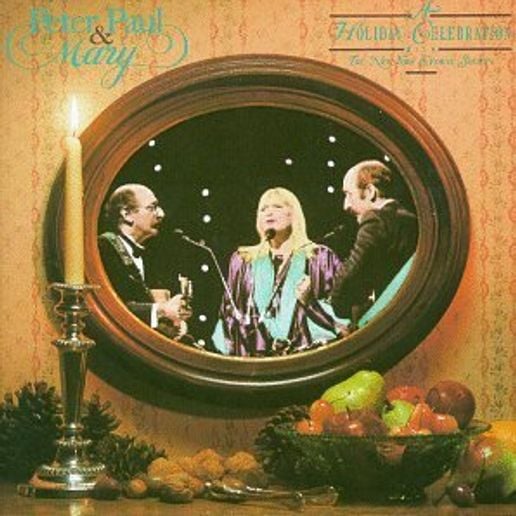
My favourite Channukah song was written by Peter Yarrow, of Peter, Paul and Mary. It is called Light one Candle. This year, in particular, the chorus is very appropriate:

Don’t let the light go out.
It’s lasted for so many years.
Don’t let the light go out
Let it shine through our love and our tears

Tonight I will light the third Advent candle on my table and I will say Gaudium Omnibus. I will also light the first candle in my menorah and say Chag Channukah Sameach. I will do the best I possibly can to keep the light shining bright.


0

Waiting around during Advent 1

When Amazon first introduced its “next-day delivery,” and people began to expect instant gratification I would joke and say, “Advent is good preparation for the apocalypse.” Some of those who heard me actually thought it was funny and would giggle too. A few years later it didn’t seem so funny. The World Health Organization had declared a pandemic, and suddenly “next-day delivery” was a thing of the past. There were product supply shortages and logistics difficulties. For a few people the apocalypse had arrived, and they found it so difficult to be patient. This impatience branched out into other areas of society, health care, meeting the needs of seniors and people with physical or mental challenges, food shortages, travel, and the list goes on. However, although some of us lost family, friends, colleagues, or acquaintances, most of us survived and did our best to return to what we considered our normal lives of yore. Yet, much of the old normal couldn’t be retrieved. There are still, some 3 and half years later, shortages in some areas of life, some businesses and services don’t even exist anymore, and there are still logistics problems.

I have a new appreciation for Advent. Although it has long been my favourite season, since those days of limitation it has become even more wonderful for me. It is a time when we focus on getting ready. We take time when there is excitement in the air of what is to come. It’s that anticipation that causes the excitement and gives us the patience to wait. In the waiting, we get to decorate, to visit with friends, to enjoy snowball fights (when there is snow) to drink eggnog, coffee, hot chocolate and to eat treats.

We also get to reach out to those who don’t look forward to the future. We get to share food, warmth, shelter, medical care, a smile, a listening ear, a hug, and a compliment, and we take time to accept what others have to offer.

I love this season of twinkling lights–some electrical and some the glow of candles. I love hearing the advent stories, being reminded of promises made and then kept, and the promises still to be fulfilled but the certain hope they will be fulfilled. I love this time of inward reflection that leads to outward expression, and waiting. I even love the sentimentality of some of the modern Christmas/Chanukah movie craze that follows the theme of abandonment, family, closeness, cynicism and reaching out–because saccharine though they are, they can, if for a short time, give a warm glow–and for some, those super sweet movies are the only warm glow around.

Unlike in days of yore, when people fasted for the four weeks of Advent, the modern season can also be a time of overindulgence. There can be too much to eat, and there can be too much to drink. For a stress eater like myself, while working on a thesis and getting too little exercise, this is not a good thing. Eggnog is one of my favourite drinks–and it doesn’t matter if it’s with or without.

Today’s first Sunday of Advent church service stressed the waiting and the hope. The sermon stressed reaching out to others, being and working in community, and both giving and receiving hope and comfort. Two of the choir members sang a perfect duet anthem, Mary’s Son, the Prince of Peace. This is the first church I have attended with more male voices than female voices. It’s quite different.

Following the service we went to the church hall to enjoy coffee, treats and birthday cake for a member who enters a new decade today, and to view a beautiful nativity display. I think there were about 13-14 different creches. They were from various countries, made from different materials and were made by people of different ages. It was interesting to see the different expressions of nativity. I hope that the display is done again next year. When I put away my Christmas things I will make sure my various nativity sets are at the front and not the back of the storage shelves.

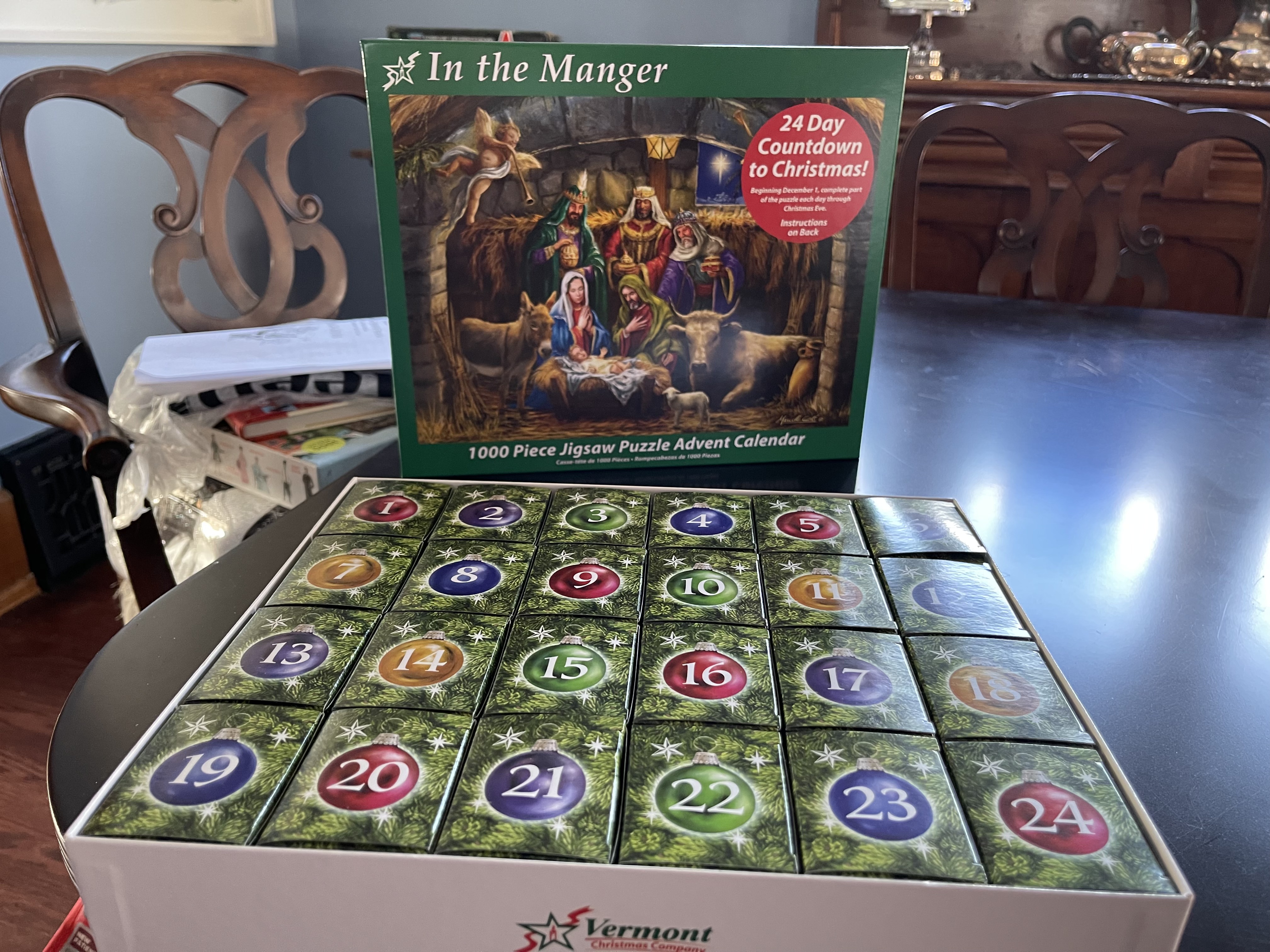
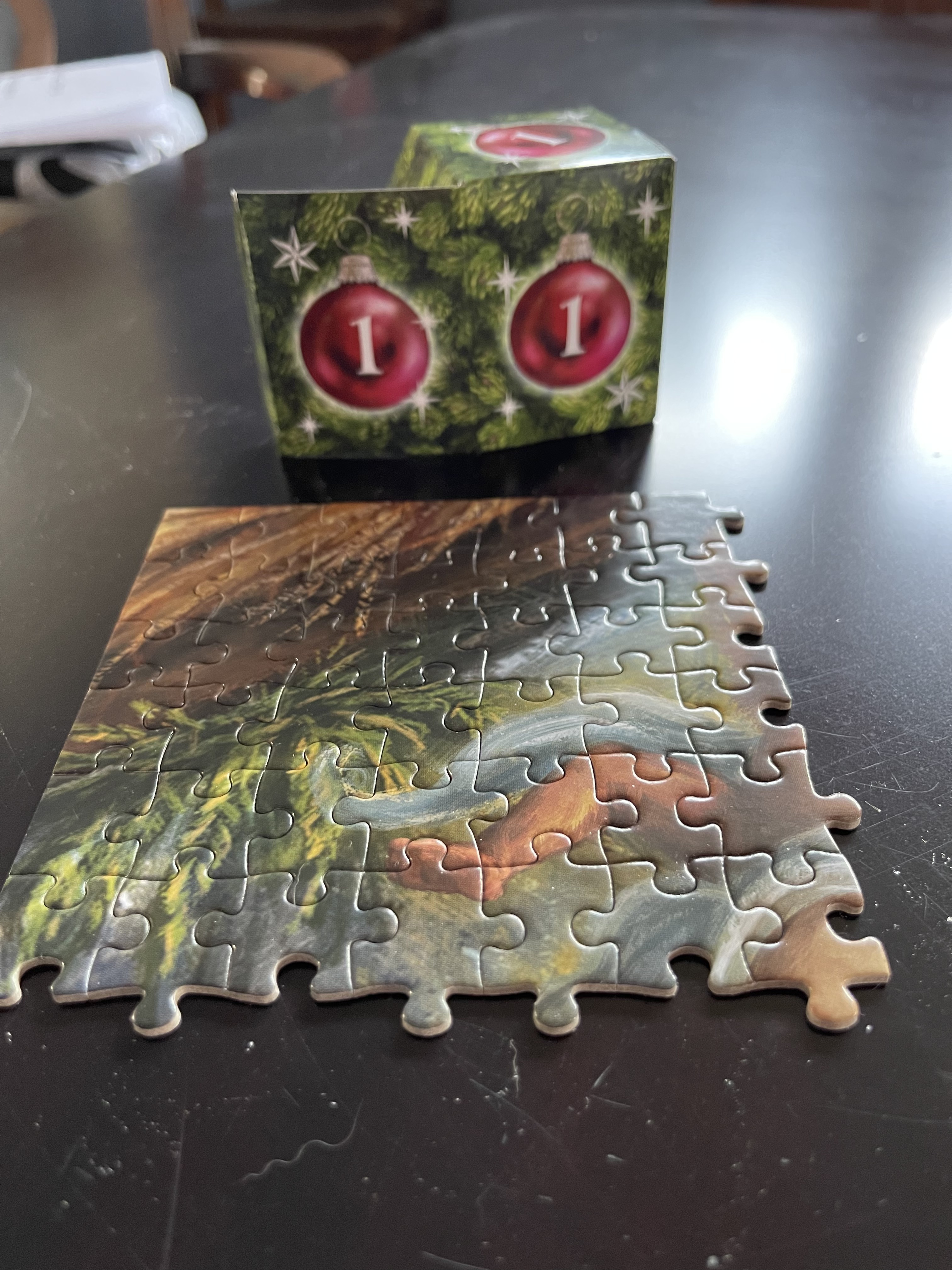
Sometimes new ways of waiting can be found. This year I received a new Advent calendar. Each day’s box contains 40-50 pieces of a bigger jigsaw. Mine is a nativity scene, and today I was able to do the first part when I returned home from church. I found it an excellent way to relax and reflect on the morning’s events.

Tonight at 7:00 I hope to join others for something I’ve never experienced before. The churches in town are participating in a joint Advent walk. I love when various church traditions join together for activities, and I’m quite looking forward to this one. We start at St. Celia’s Roman Catholic Church, then move on to St. Paul’s Anglican Church, and finally end up at Grace United Church–where there will be more food. Each year the order of churches. changes.

Many of us are waiting during this particular Advent in different ways. We are waiting to see what transpires with many governments, and one large government in particular that is changing leadership. We are waiting to see what emerges within the context of our faith-filled hope. One of the concerns that I and many others far more intelligent and knowledgeable than I hold in the midst of this waiting, is the usurpation of Dietrich Bonhoeffer to the Christian Nationalist cause. The Bonhoeffer being vocally, cinematically and journalistically portrayed by some is the very antithesis of the Bonhoeffer that lived. So, it seems to me to be fitting to conclude my ramblings about my love of the season of waiting with a few stanzas from one of his poems:

Waiting Is An Art

Celebrating Advent means being able to wait.
Waiting is an art that our impatient age has forgotten.

Those who do not know how it feels to anxiously struggle
with the deepest questions of life, of their life,
and to patiently look forward with anticipation
until the truth is revealed,
cannot even dream of the splendor of the moment
in which clarity is illuminated for them.

And for those who do not want to win the friendship
and love of another person—
who do not expectantly open up their soul
to the soul of the other person,
until friendship and love come,
until they make their entrance—
for such people the deepest blessing of the one life
of two intertwined souls will remain forever hidden.

Whoever does not know
the austere blessedness of waiting—
that is, of hopefully doing without—
will never experience
the full blessing of fulfillment.

For the greatest,
most profound,
tenderest things in the world,
we must wait.

It happens here not in a storm
but according to the divine laws
of sprouting, growing,
and becoming.
-Dietrich Bonhoeffer translated from the German by O.C. Dean Jr.

Advent blessings and patience to all.

0

Life goes on….

This past week, my writing has been focused exclusively on my thesis. Even with that focus I still didn’t get much done. That is because it was a “bad head week”–so writing, which never comes easily to me, was more of a slog than usual. In my head injury group, everyone was saying the same thing. It was a bad head week. It didn’t matter if the head injury was caused by accidental trauma or was caused by illness. No one could pin down why it was such a “bad head week,” everyone just said–it was a “bad head week.”

These bad weeks are getting fewer and further apart for me–I hold this as a sign of ongoing recovery. My way of dealing with them now is to push myself to do what I feel I must do and also to push myself to do what I’ve been looking forward to for such a long time, it would break my heart not to do it. Then I rest as much as my head says I need to rest. So, I decided to use one of the other “tips and tricks” I’ve been given and I switched from doing lots of daily writing to recording my experiences vocally. I was often seen with my phone to record observations and reflections. Being oral rather than writing is itself a bit of a different experience. But here goes…

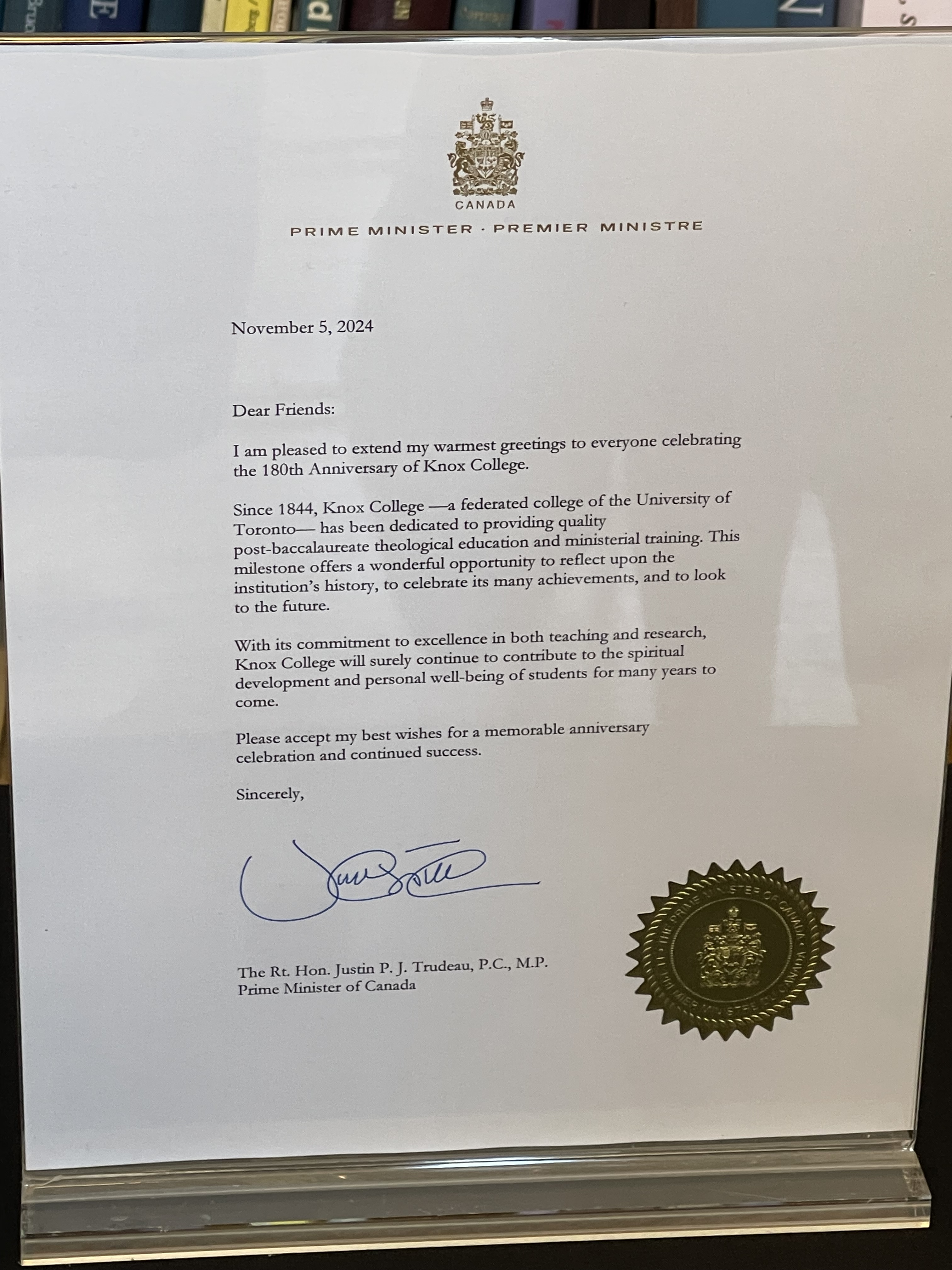
My week began with a medical appointment in Toronto. I was fortunate that I could get it this past Monday because I had already determined I was going to go to Knox College for its 180th anniversary and meet with my advisor on the Tuesday. Whenever I have a two-day excursion in Toronto, my good friends Erin and Jay put me up. They even have one of my favourite lower-alcohol IPAs in the house for each of my visits.

This past week, Jay was out of town and so Erin said I’d have to go to “Theology on Tap” with her. This is a group that she and I initiated 12 years ago, where people from the church and community can gather together to discuss theology and have their favourite brew. I say brew because tea, ale and everything in between is enjoyed. Most often, the group starts by reading a book, 1-3 chapters at a time, and then the members discuss their thoughts and responses, although the jumping-off points have also been articles, lectures and movies. This is one of the few activities in Toronto that I really miss. It’s great to sit and talk with informed people about theology. This was even true on Monday night when I had not familiarized myself with any of the subjects they were discussing. It was still so nice to be there and hear thoughtful discussion.

The next day was the 180th birthday party at Knox College, University of Toronto. It was a lovely day with an incredible service of worship led by the chaplain Rev. Tim Kennedy, who combined the anniversary with All Saints Day. It was attended not only by faculty and students but also by alumni, and some individuals from both Toronto School of Theology and UofT. We were reminded that we are called to go forward living the faith passed to us by the Saints who have gone before.

Of course, like any great birthday party, there was cake–and what a cake.

I returned to Port Dover immediatley following my meeting with my advisor. Tuesday night, a good friend of mine stayed over at mine. It wasn’t a visit, as such, but rather I was a place to stay while she attended a luncheon reunion with several of her elementary and secondary school chums near here. However, since we were together we decided we had to order pizza for dinner and watch the American election results together. We flipped back and forth between CBC and CNN because we like to see and hear different aspects of elections when we are watching the results. She’s about numbers, I’m about analysis and consequences. Unfortunately, PBS sound broadcast was not working properly for several hours, and that was the station on which we could compromise. When it was finally restored we rejoiced.

On Wednesday I woke up in my own bed with two little faces staring at me. They made it very clear that they do not like me to go away overnight. I took my friend to a local diner for breakfast and then another mutual friend drove her to the nearest GO station, so I could go into my writing group. That day also saw the final haulage of demolition materials from the bathroom in the morning and because of the noise, I joined my writing group from the kitchen. The good news is, the destruction has been completed, and the construction is about to begin.

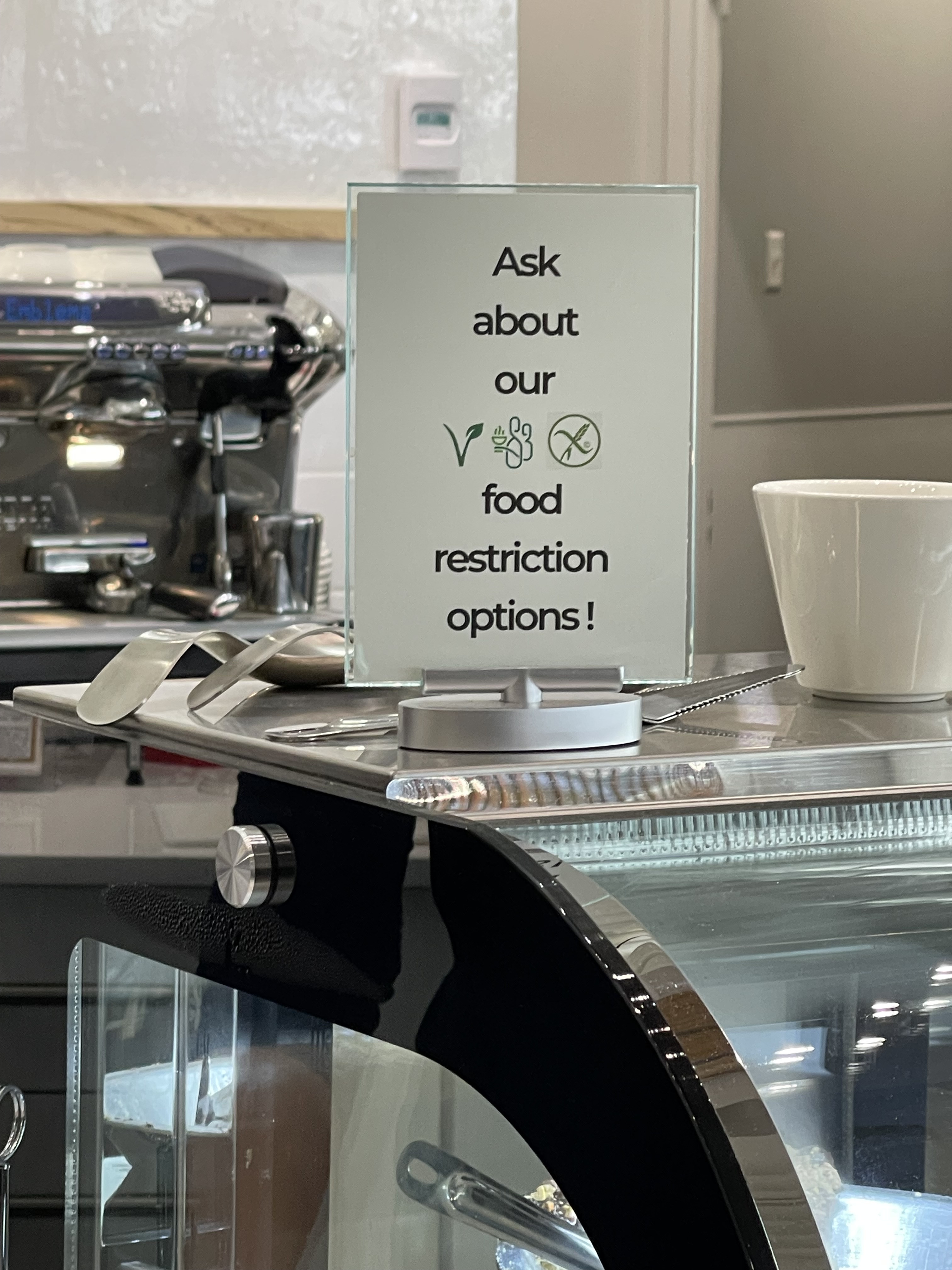
I had a business luncheon meeting to attend after my writing group, and I joyously found myself eating in Riversyde83 Foodhub. I had never been to this lovely little food and coffee place. It describes itself as:

“Riversyde 83 is a project of Church Out Serving, a unique-to-Norfolk charity with a community focus. Experience our hospitality in the café eatery! Explore with us all-things food in the community kitchen! Browse the array of products in the marketplace! Or host your event at one of the on-site spaces! And, because we are a charity, foodhub proceeds and donations will support community food services and programs.”

Riversyde83

I would recommend it to anyone who’s looking for a place for a good lunch, but remember to make sure you go when you’re not in a hurry. It is a place of opportunities.

Thursday and Friday were regular writing days with my banjo lesson thrown in for good measure. I don’t know why my teacher continues to put up with me but I am most grateful that he does. It’s one of the great joys of my weeks. Friday after lunch there was an online meeting, and then I relaxed for the evening with my hand quilting and a good mystery.

Saturday was a day of housework. That’s quite a challenge when you’ve got a renovation on the go–even a small one. My little washroom reno isn’t that monumental, but it’s at the top of the stairs, and that means the debris gets dragged through the house. But as said above, we are now on the upside of the work. Part of the day’s housework included some shopping, and while doing that shopping I had to buy feline diet food. Poor Scotch was told to lose a pound in August and somehow, I don’t know how she has gained 1.5 pounds. We will try this and hope it works. I swear the poor little girl feels mortified. Butter is fast, agile and strong, just like all sleek cats. I can tell Scotch is feeling a bit jealous.

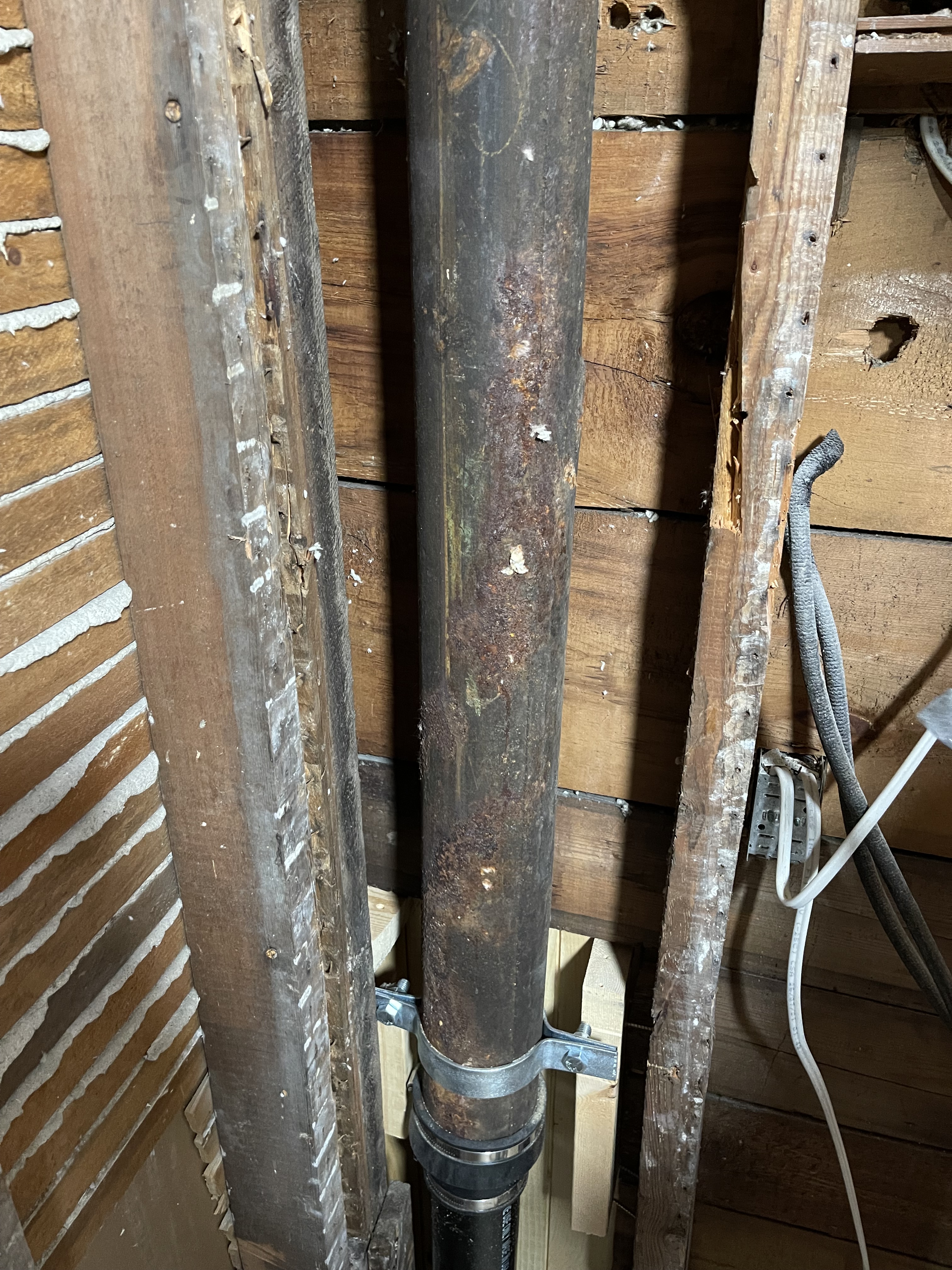
For those of you who have never seen a bathroom stack circa 1940.

Today, I questioned whether I should go to church or stay at home and rest because it was another “bad head day,” but in the end, I decided I’d go. I’m so glad I did. It is a very dreary and wet day here in Port Dover, and walking into the little church filled me with both physical and spiritual comfort.

Today is Remembrance Sunday, and the service was respectful, thoughtful and emotional. Bishop Barry made a point of stating that this day is not one for celebration but for commemoration. His sermon was also political as he reminded us of the various responses, including his own, to the results of the election south of the border, that Christian Nationalism is not Christian and the importance of fulfilling our Christian responses to the oppressed, the poor, 2SLGBTQ+ people, and others. The Remembrance, the readings and the sermon combined to instill a message of call, comfort and being in a community loved by the great I AM, upheld by Christ and guided by the Spirit.

As usual, following the service we had a wonderful time in the Church Hall with food, coffee and fellowship. The calories, as usual, were wonderful. I also bought my dinner there. It was a delicious home-made pea soup. I have enough for tomorrow too. I also bought a red pepper spice soup for later in the week.

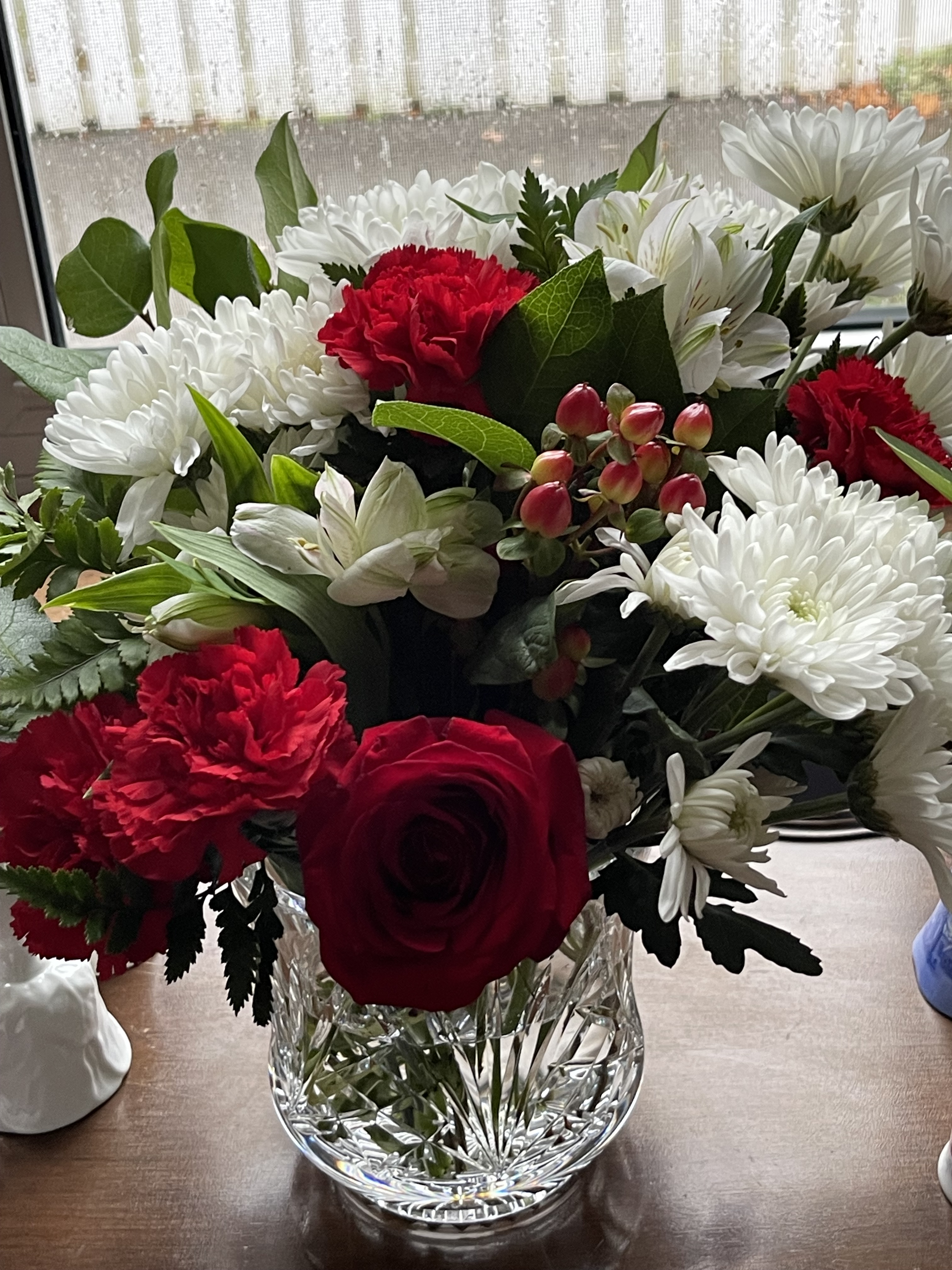
The final surprise of this wonderful morning was that the people who arrange the flowers on the altar decided I should get to take them home today. I was stunned and touched by their kindness. I arrived home to discover my beautiful Waterford cut glass vase has a crack in it, so I resorted to using my beautiful Nova Scotian cut glass ice bucket. I did my best, but it doesn’t have quite the height these flowers need to show off their real splendour.

My “bad-head week” forced me to approach the past seven days in a different way than I usually do. I’m appreciative of that change. It was good to see my life and its relationship with the rest of humanity, and the earth with new eyes.

0

Tomorrow I go Home

I have had one of the most eventful autumns of my life. The events have not been catastrophic or unexpected, they have simply been numerous. Most have been enjoyable but all have felt rushed. In the last five weeks, I have had only four days at home alone to catch my breath.

I have covered the eastern half of Canada from Sydney to Winnipeg, much of it driving, some of it flying (and wishing we had better/more frequent train service in this county) and all of it interesting.

I have seen a beautiful moose that courteously stayed on the side of the road rather than trying to cross it. He gave a call that I am going to assume was a love song because he had a romantic look in his eye. (Unfortunately, I was driving and couldn’t take a picture.) I have seen cruise ships come into the harbour–and the thousands of people who disembark to walk around the city. Their very presence changes the nature of the community they have come to see.

I’ve seen touching acts of kindness and cruel acts of bigotry.

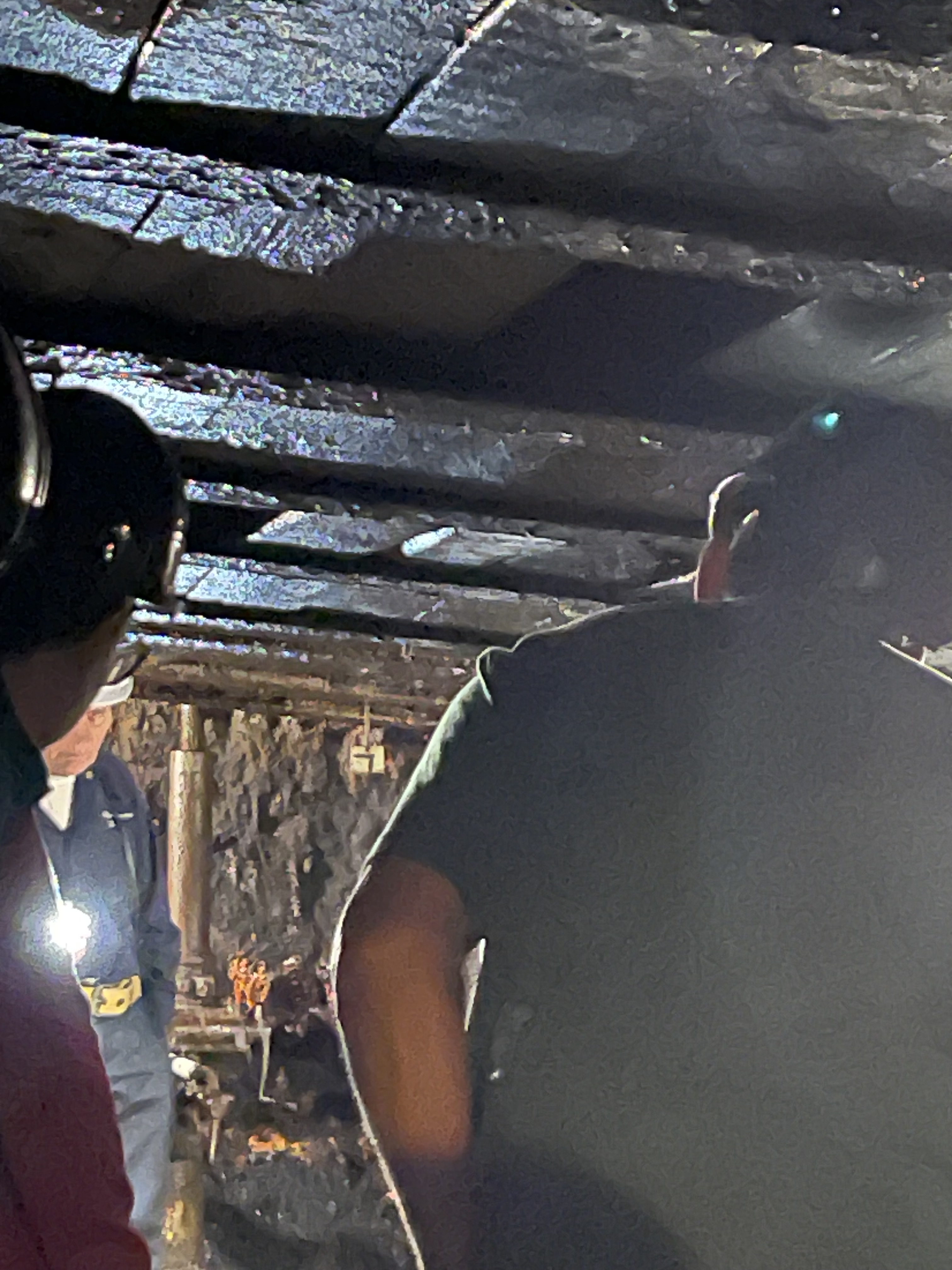
I have gone underground. I just went into a couple of chambers of the coal mine, but it was enough for me to be in awe of those who went down before the sunrise and came up after the sunset. It made me appreciative of all that has been done in this country by those who came before me to give me a life as comfortable as I have in this era.


I have seen the beauty of the changing colours the ebbing and rising tides, and the different geologies and geographies of this land. I have had local maple syrup from a variety of regions, lobster, scallops, perch, venison, chicken, bannock and bison, corn, wheat, apples, pears, squash, pumpkin, a variety of dairy, egg, and cheese products. I enjoyed several locally produced ales with my meals and my meals and snacks reminded me of the abundance of resources we have.

I have seen the homeless, the addicted, the afflicted, the ignored, the despised, the removed, and the ones who have lost all hope. It reminded me of how unwilling we appear to be to share our abundance, and I should probably count myself in the number of those who could share more than I do.

I have attended the baptism of a three-week-old infant and conversed with a 106-year-old man in a long-term care facility. I have attended a birthday, a graduation, a funeral, a dedication and visited a hospital. I have also worshipped in churches, outdoors, in a synagogue, and in a mosque. In each situation, I have found learning with joy and learning with concern.

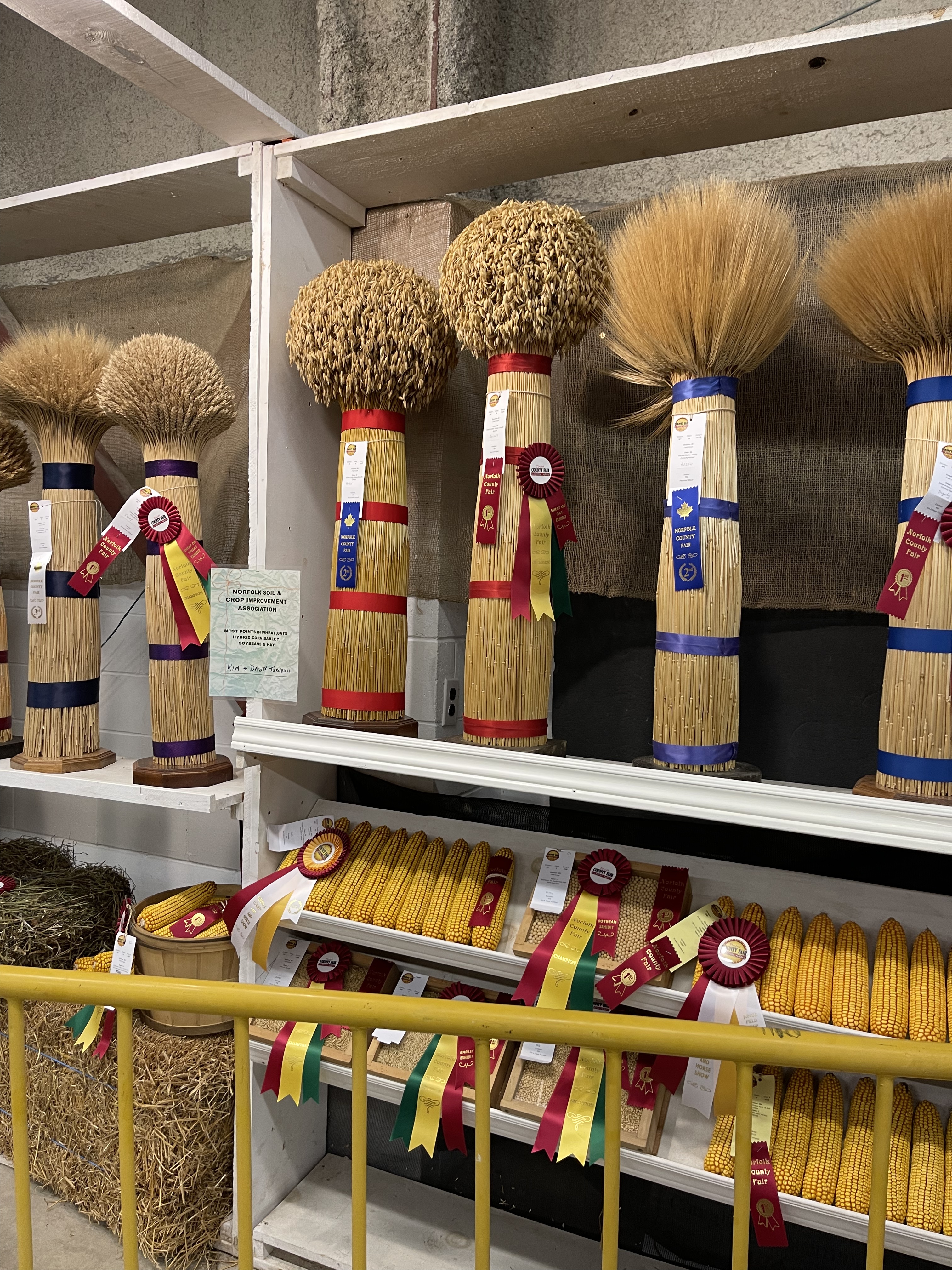
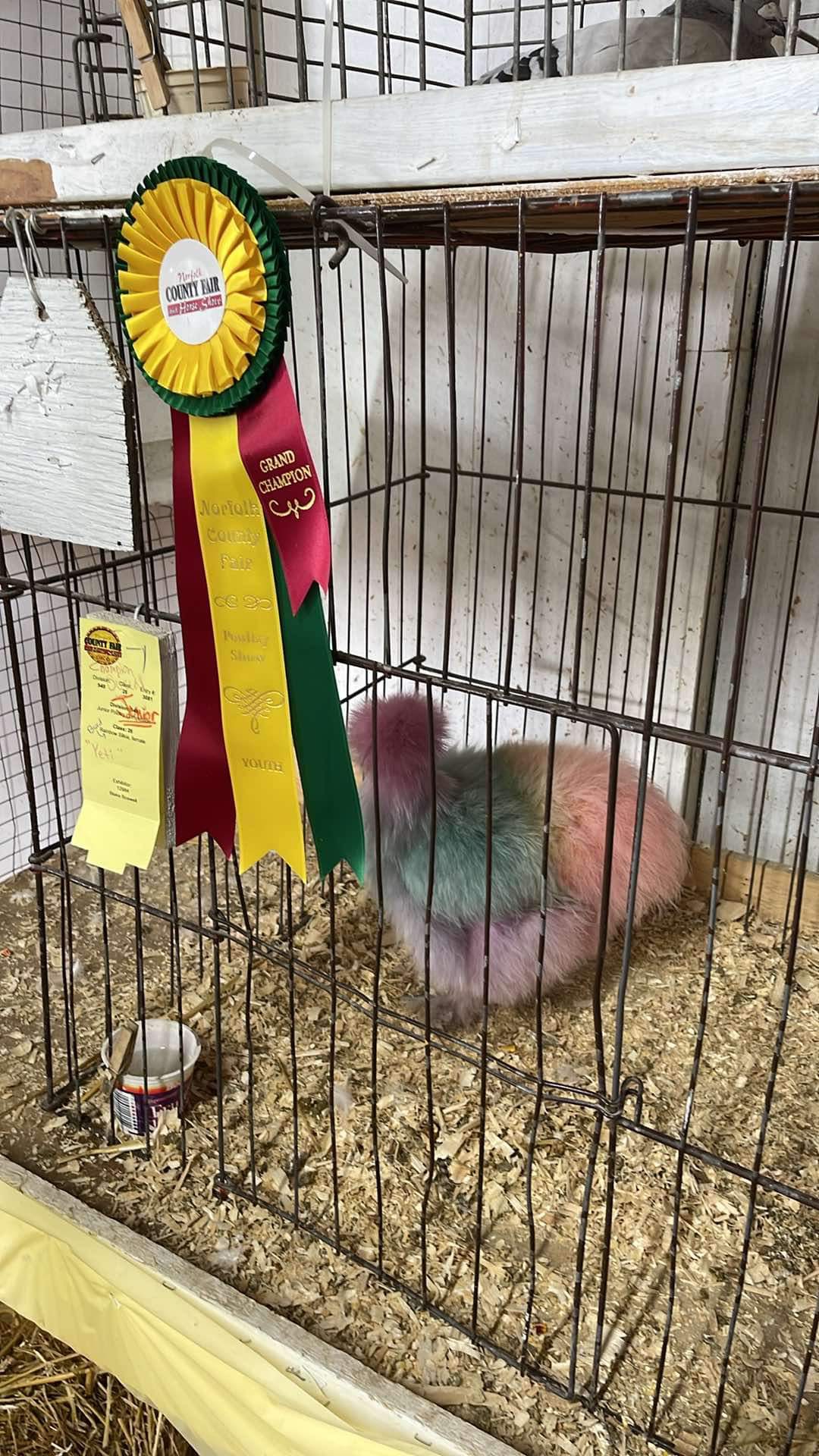
I went to an agricultural fair and saw the wonder of what can be accomplished when humanity works with other speices. Determined faces struggled to accomplish the best possible results before showing their produce and animals, and there was pride on the part of some stock who showed off by plumping feathers, raising their heads, or simply striking a pose. I saw delight in the eyes of those for whom so much of this was new.

In an other area of the Fair there were screams of joy and fear. The midway held such excitement, and there were tears because one more ride wasn’t possible and the ice cream got dropped.

I have seen cities whose buildings blot out the sky and cities that blend with their surroundings. I’ve seen industrial hubs and transportation hubs. I have experienced kindness and generosity, as well as rudeness and contempt.

I have experienced sorrow and celebration, grief and gratitude. I have been to a graduation where I saw a myriad of diverse national “special occasion” clothing and I was amazed and awed. I was unable to approach people and ask permission to photograph, but I tingled at all the colours that were so enlivening and lent so much joy to the occasion. I have been amazed at what I have encountered, and I have been so thankful.

While all of this has been happening I have joked and said my body has begun to hate me. My eating habits, my sleeping habits, and my exercise habits keep changing, sometimes on a daily basis. I get bloated and dehydrated, go hungry and hurry when I do get to eat and sometimes overeat. Even this has been a time of reflection.

I thought of those whose routines are non-routines because of constant change and the need to leave unsafe places. They could be unsafe places because of natural occurrences, perhaps natural occurrences resulting from the way we have changed our climates. Or they could be unsafe places because of the bombs and artillery that humans tend to lob at one another, or unsafe places because of persecution for no reason other than being who one is.

These five very rushed, very eventful, very demanding weeks have been good for learning, experiencing and relating. But I will be glad to get back to my nice boring home life for the next several months. I am glad to have the freedom and ability to get back to my nice boring home life for the next several months.

0

Colour, Warmth, Noise, Quiet, Animals, Crafts, Friends, Food… The Thanksgiving List Goes On

Last weekend I returned home from a research trip to Nova Scotia. I was so tired I collapsed and did almost nothing all weekend. I didn’t get any writing done at all.

This week I’m not quite as exhausted, but it has been a very hectic week in a very different way. The Norfolk County Fair is taking place. It was the first time I attended and I enjoyed all of it. It is one of the more interactive agricultural fairs I’ve attended, and there was so much fun and learning. I am always amazed when I see the animals the various crops, the role of the farmer and the hard work that is done to ensure that there is food for humanity to enjoy. I am so thankful to the Creator and to them all, and I pray that we can find ways to ensure that food is shared equitably.

On Thursday a very dear friend kindly came to visit me for Thanksgiving. Spending Thanksgiving together has been a tradition for us for the past eleven years, although when I was in Toronto, she only had to walk over three blocks. Now we have to make arrangements with her group home workers to figure out how she’s going to get here, but we do it, thanks to the workers’ help. After discussing it we both agree it is worth the struggle. She also thinks she can learn to ride the GO train to the nearest station by herself, and so our learning programme will commence this weekend as I accompany her home on the train.

She and I went to the fair for three days (we volunteered at a booth for a couple of them) and had a great time wandering around the fair, exploring the sights, sounds, crafts and talent on our off time.

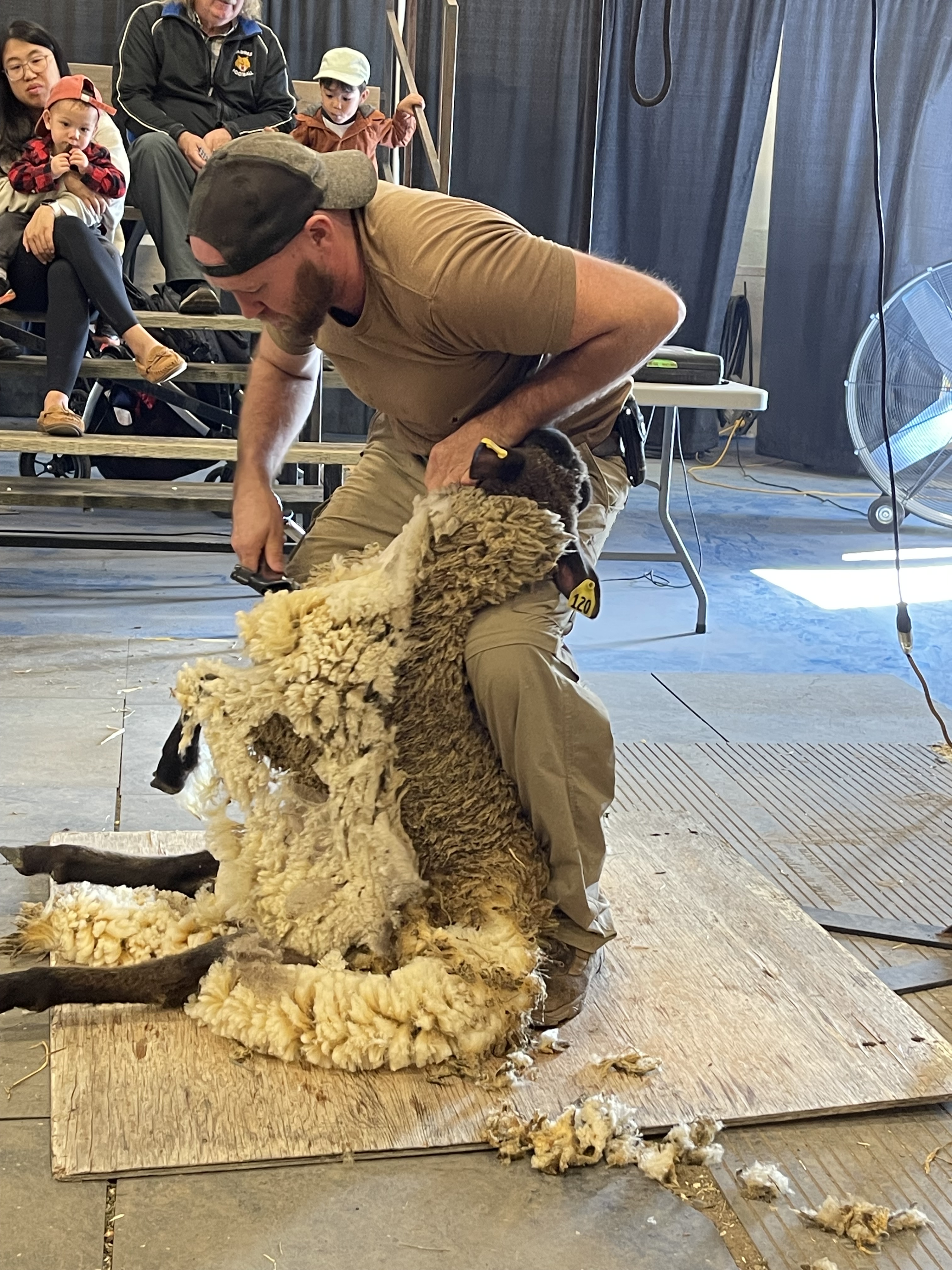
We loved watching the sheep get a pedicure and shear. There were times when I’d say she was actually enjoying herself. I thought it was somewhat like a spa day.

We both marvelled at the beauty and delicacy of some of the animals and the beauty and strength of others. We loved the various demonstrations and the patience with which everyone explained things so that we could understand. It was a place of so much kindness blended with a great deal of enthusiasm.

We were in awe of God’s nature and the way that gifted farmers work with that nature. As we learned, we each decided we feel sorry for mother llamas. They’re pregnant for 340 days to have a child. That’s just a bit too long for my liking.

Church this morning had a very warm and loving feeling to it. It was decorated simply but beautifully and it was packed. Our postulant, Janice, preached the sermon and it was absolutely superb. She discussed the beauty and joy of giving to others and told a story that showed when we give what may seem frivolous it can often result in giving complete joy, sometimes for surprising reasons. I was struck by her words. I think of how often funding for various programmes and individuals is dependent on what the funder thinks is important rather than what will give joy, hope, purpose and inspiration to the recipient. That type of funding day is lessening, but is not yet gone. The message, the inspiration and the comfort offered in both the sermon and the service made me forget to take any pictures of the decorating.

Following church, we enjoyed Thanksgiving dinner with good friends, again at the fair. I don’t know whether we’d wish to do this every year. However, this year, while I’m living in the midst of chaos, with one more week of it to go, it was nice to have dinner prepared. We concluded our last time at the fair with me standing in the rain, watching my friend have one more ride in the Midway. (I can’t do most midway rides since my head injury.)

We had laughter and activity, exploring and learning, wonder and kindness, flavour and calories We also had so much more. We both said that we have lots for which we are Thankful.


1

Enjoyng Pilgrimage in a New Way

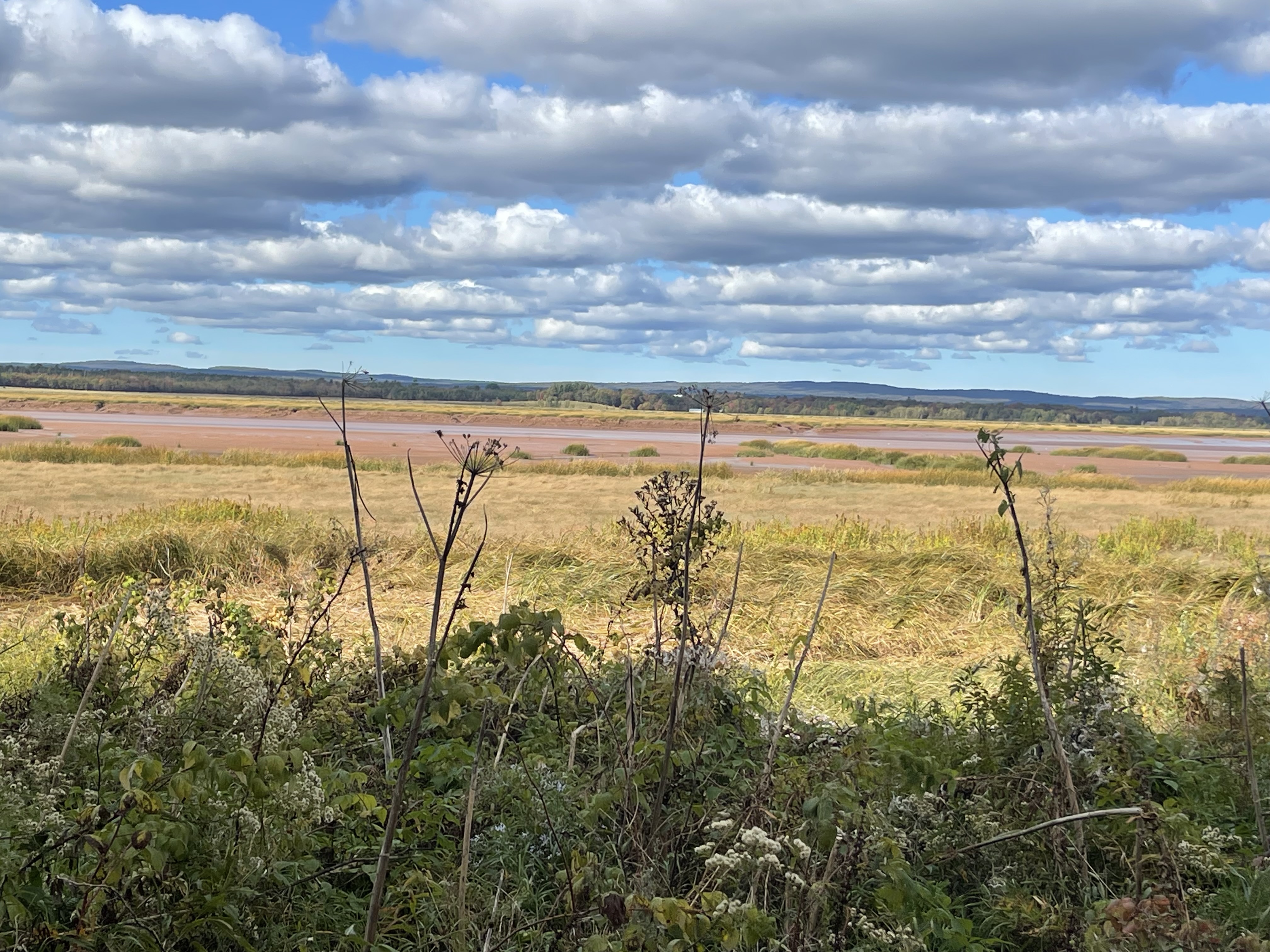
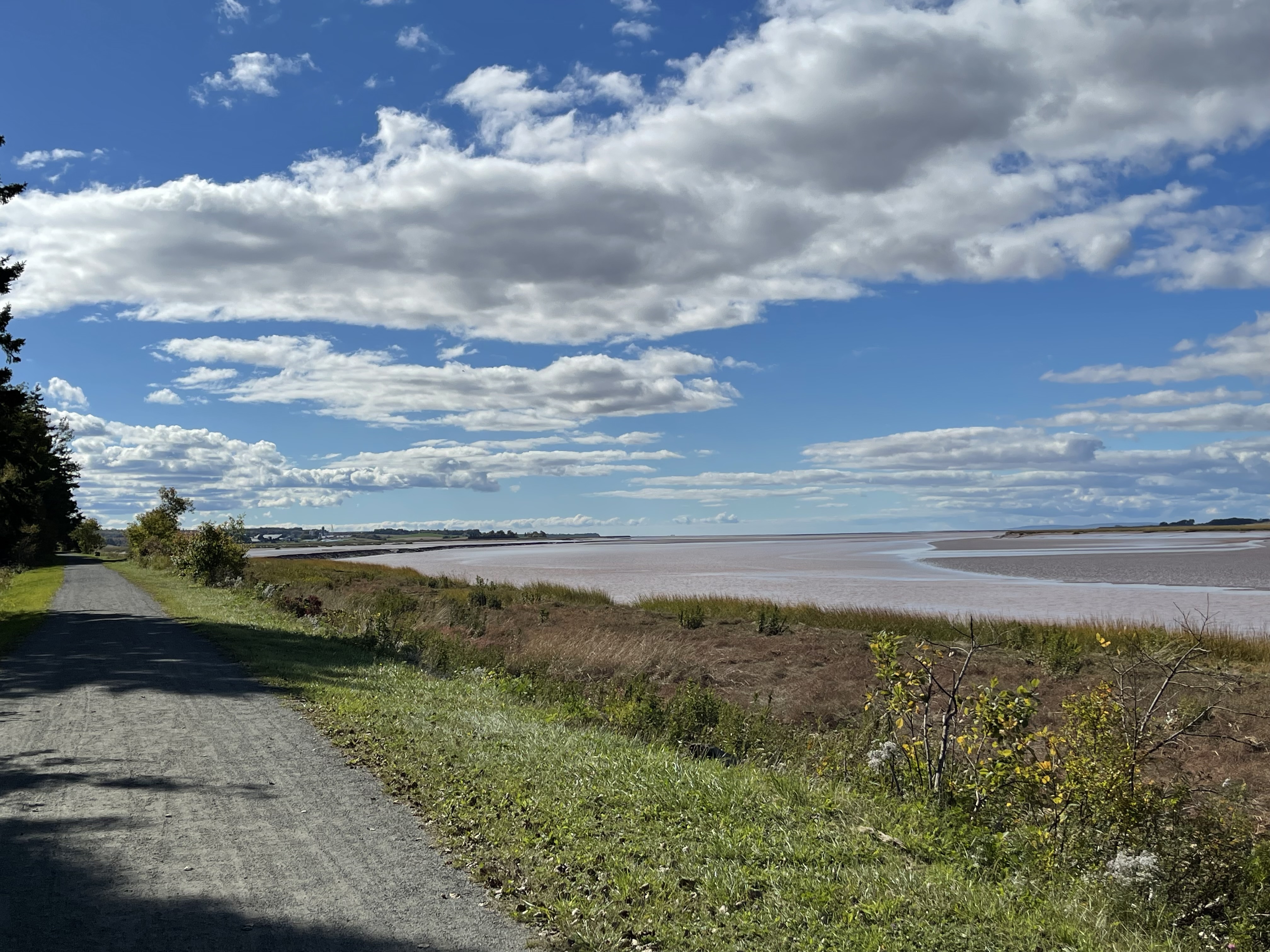
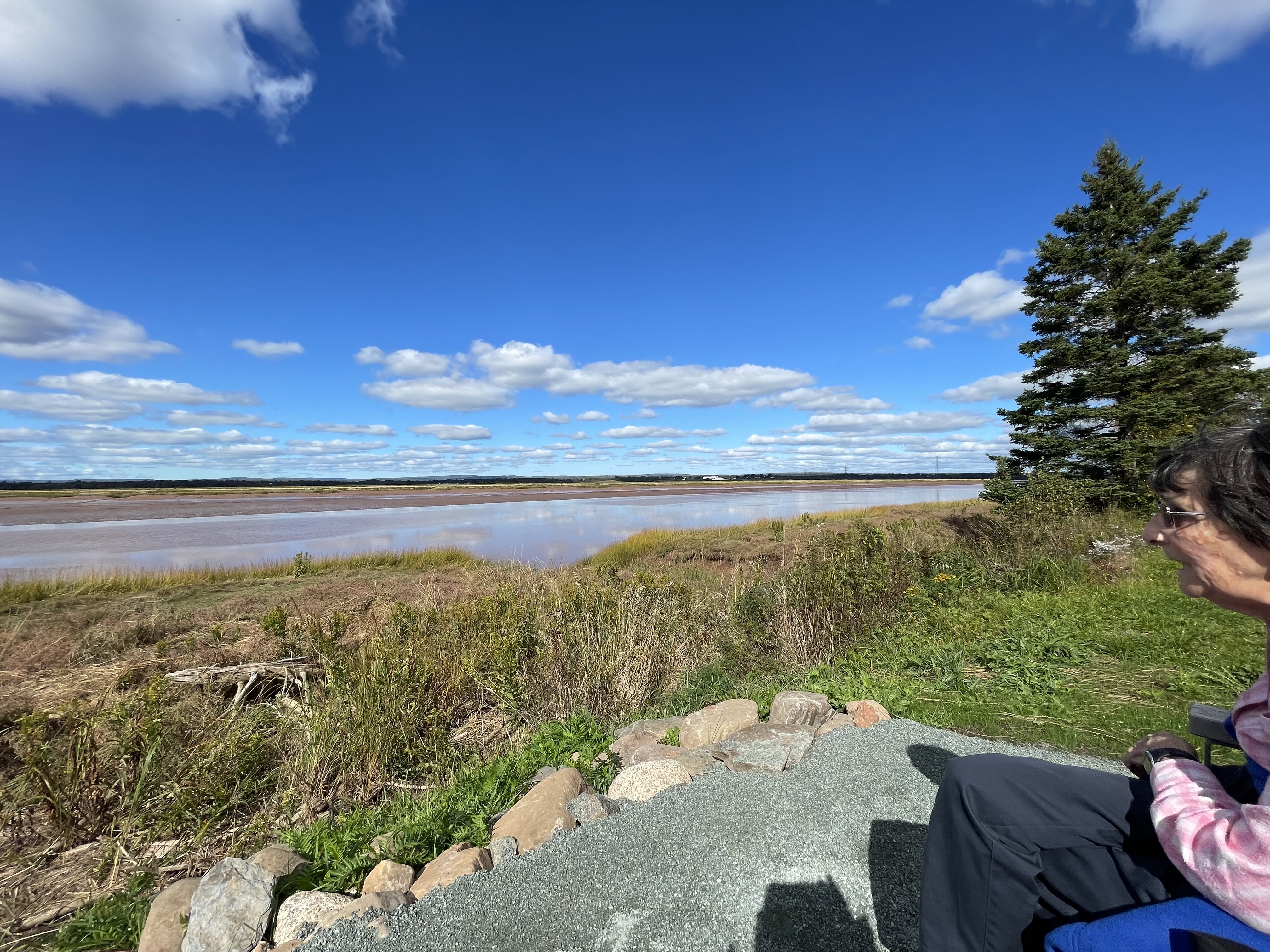
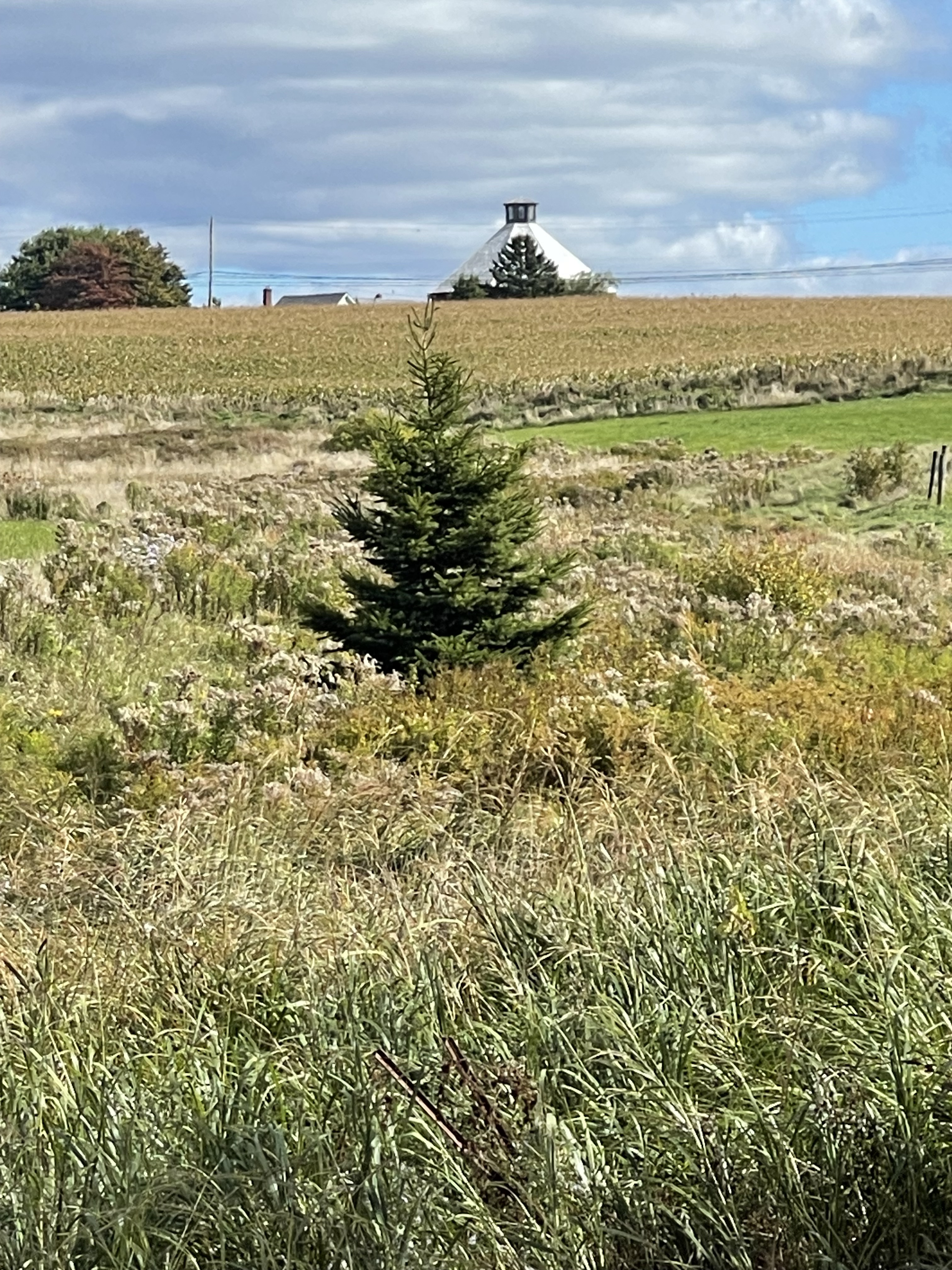
After Church, my cousin Heather and I went for a walk on the Cobequit Trail. We were on the Old Barns Section and walked almost as far as the Round Barn Lane. That’s about 5.5 km, my furthest consistent walk since my head injury. My last good trail walk was a year ago with another Heather, who is not my cousin.

Perhaps it was the beauty of the area that made me not realize how far I was walking or all the unique features I was seeing because areas with tides are so much different than those places I go on the Great Lakes of Ontario. Whatever it was, we were almost at the end of our walk before I had even the slightest of balance issues.

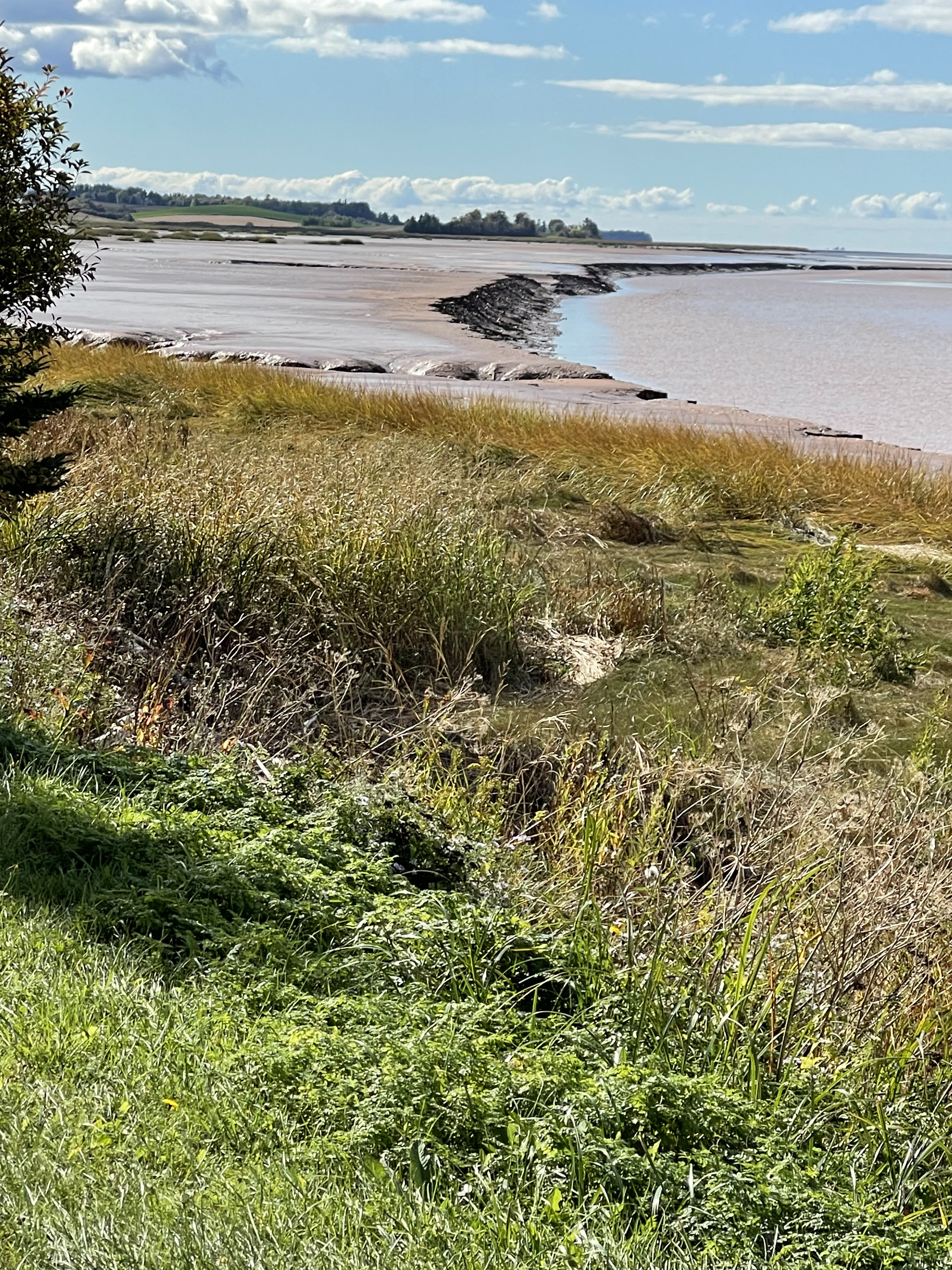
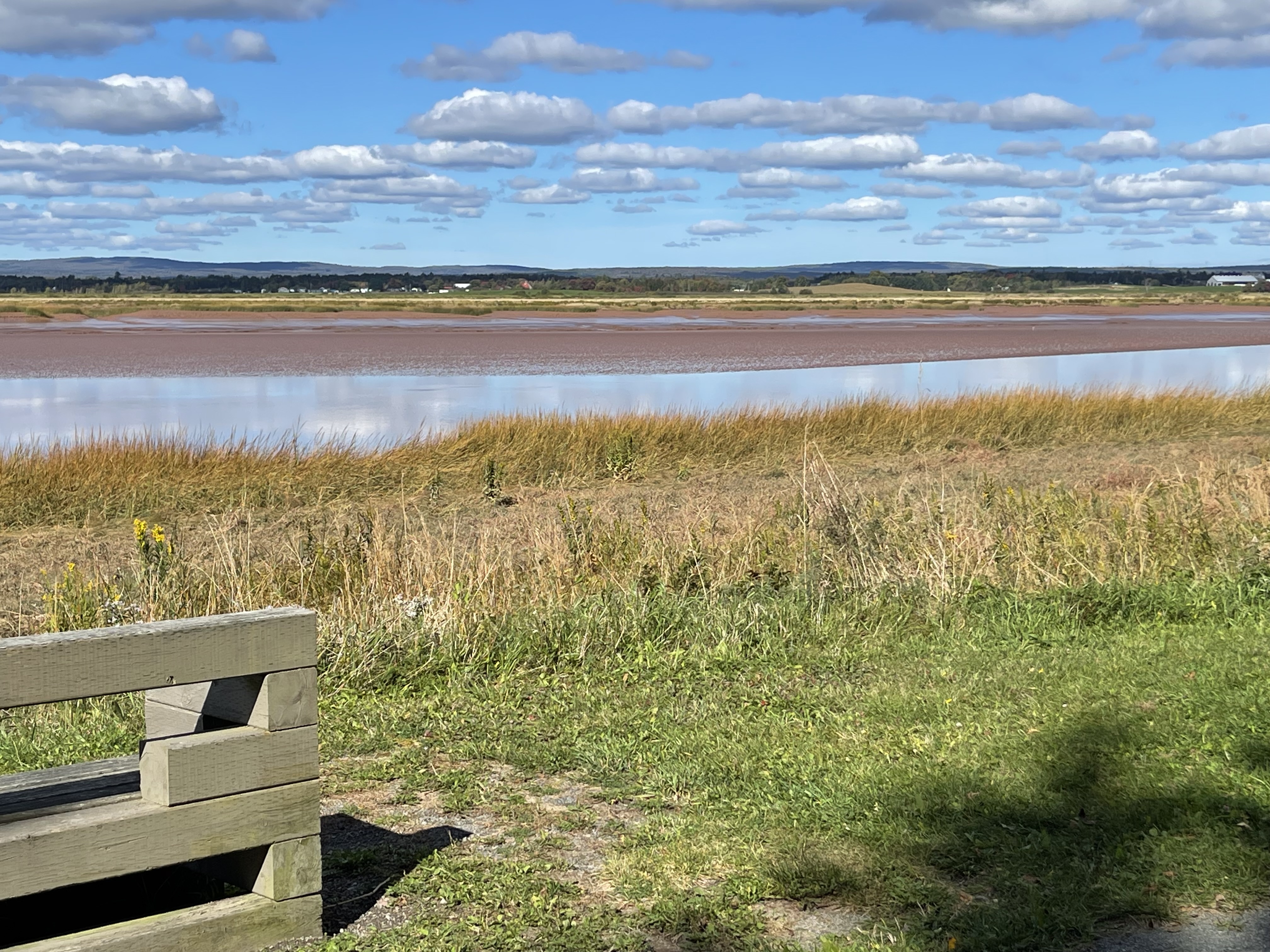
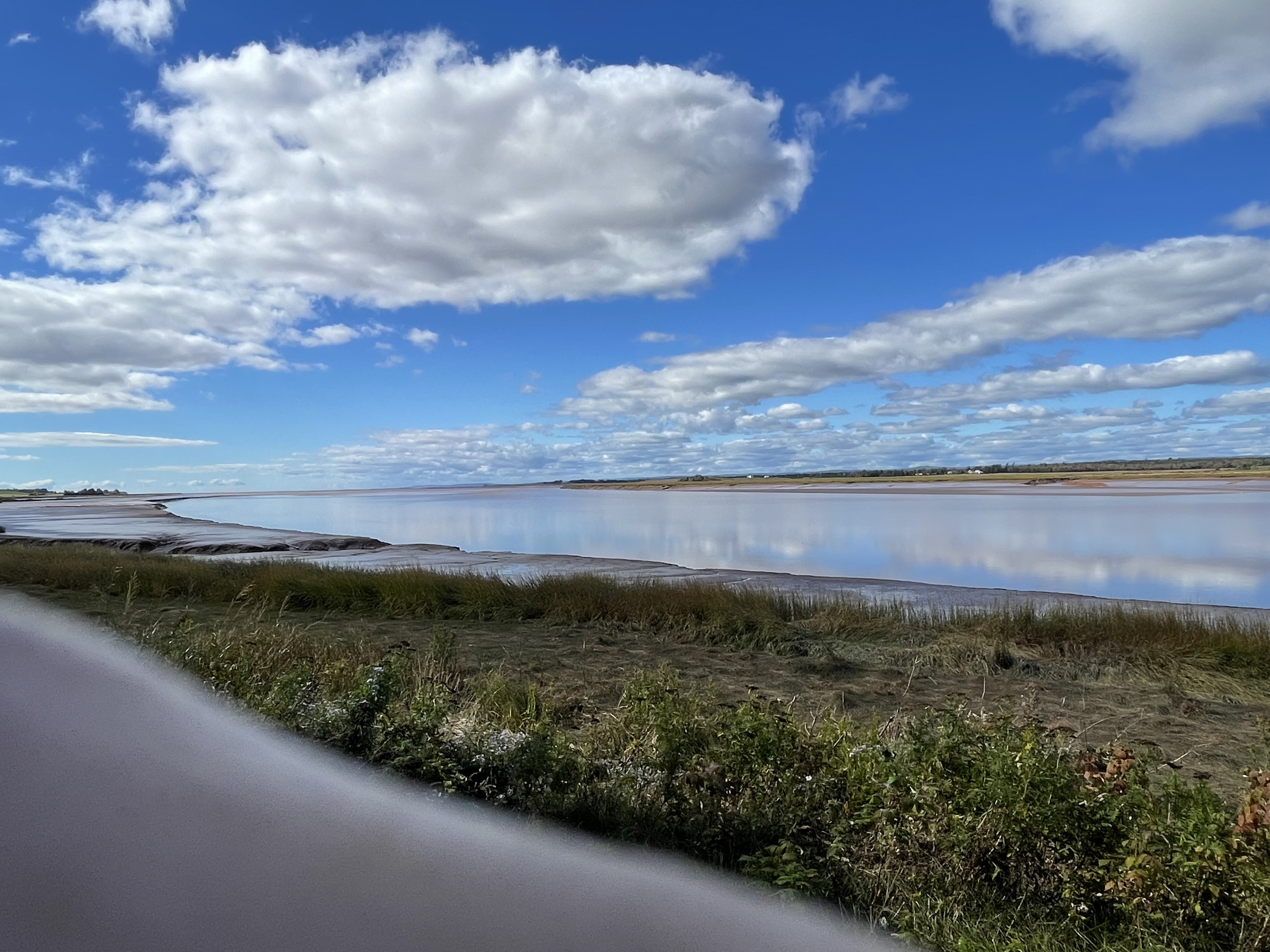
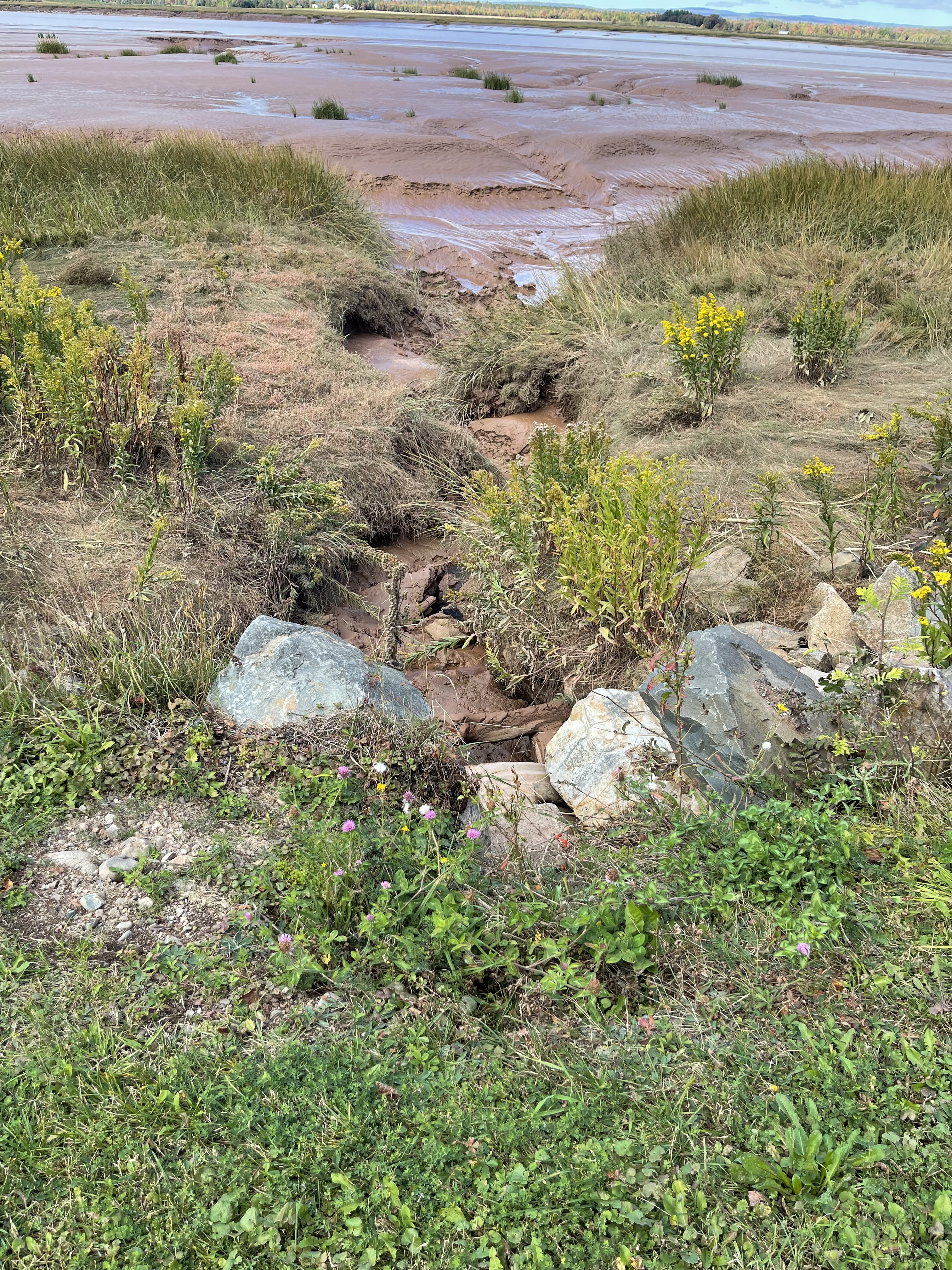
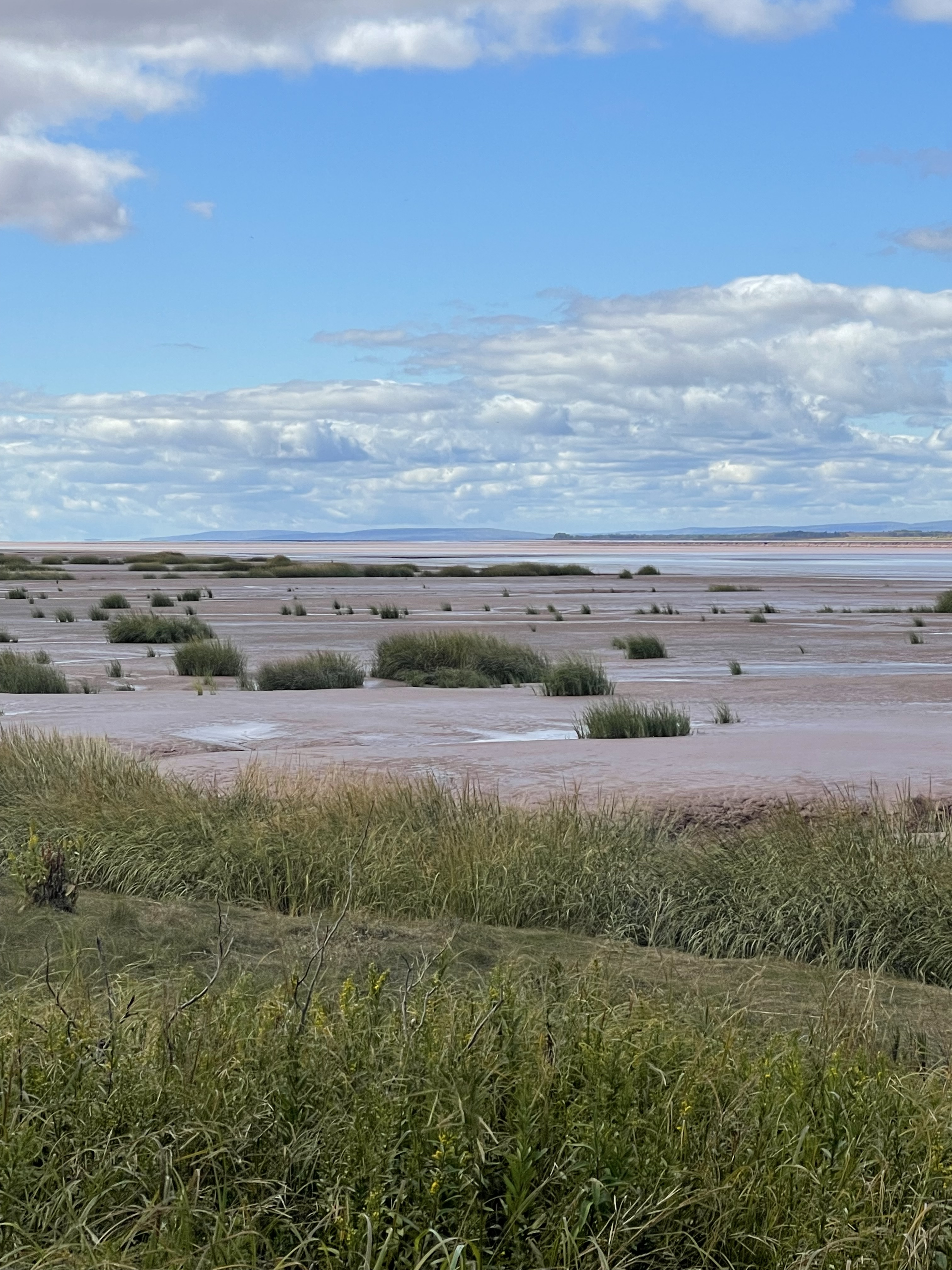
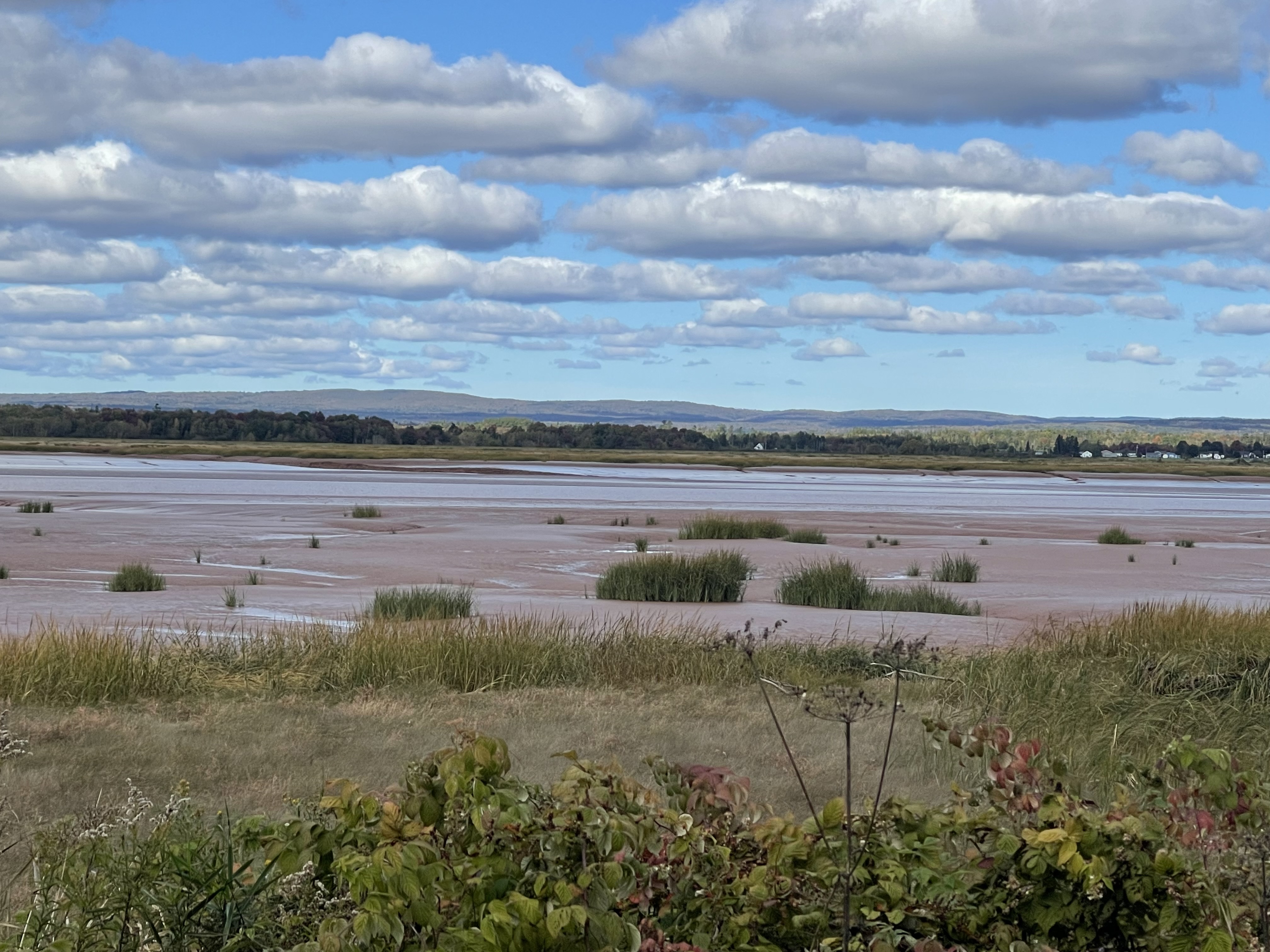
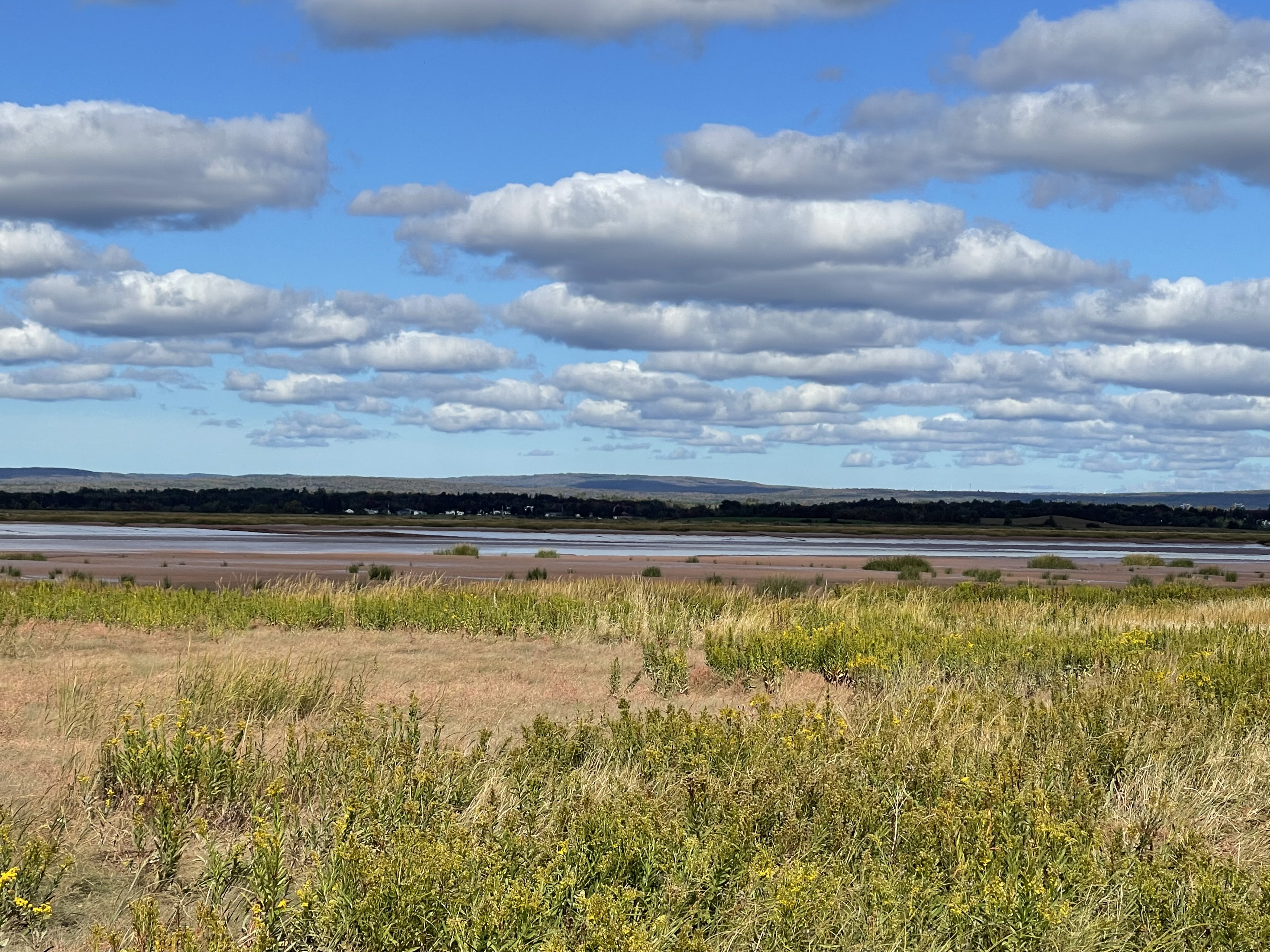
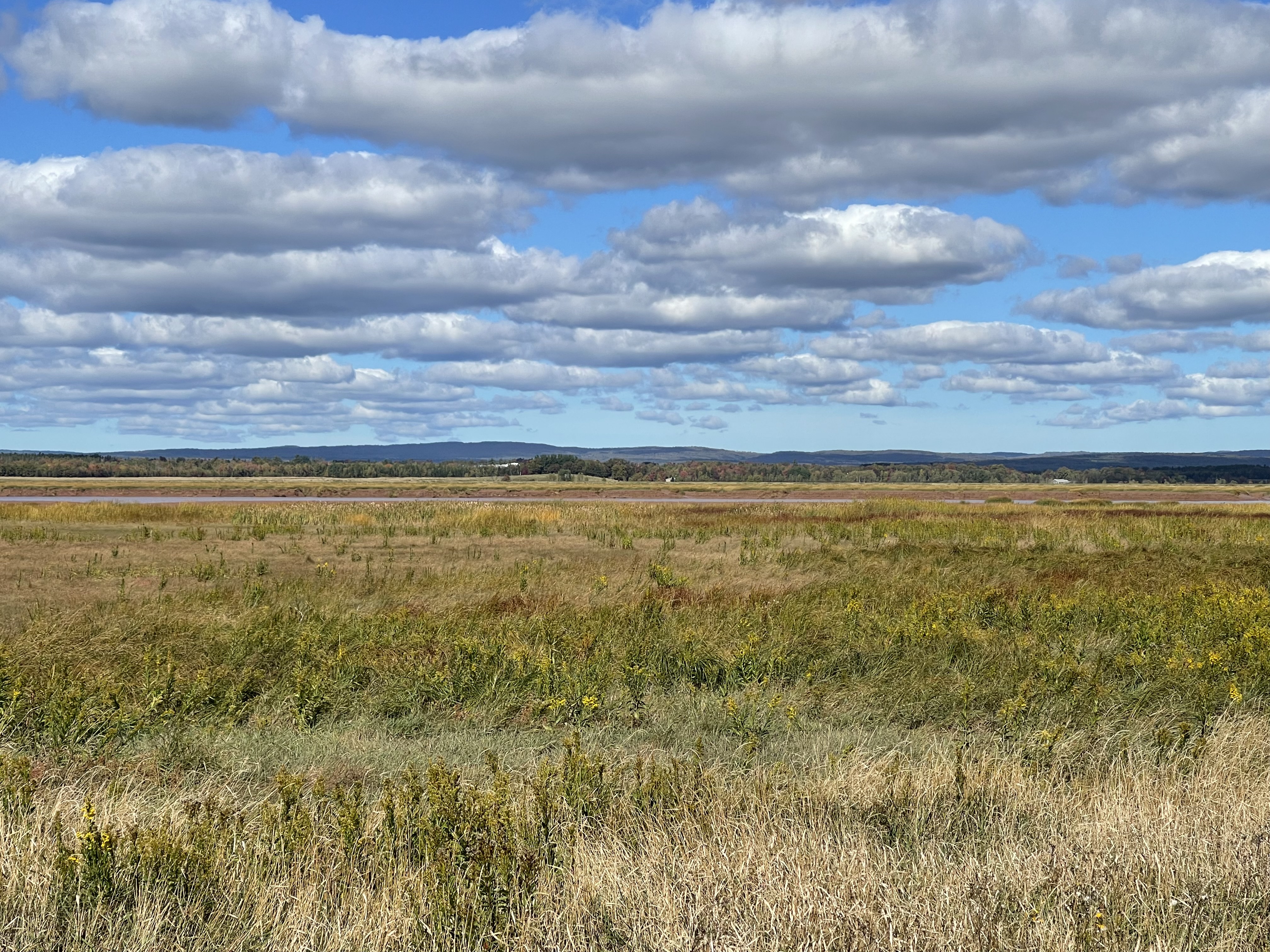
We walked and saw other walkers, cyclists, dogs, cows and the wonder of the tidal lands that are marshlands of the mud flats. There are grasses that can survive, if not thrive, on salt water, and they are encroaching on the mudflat areas

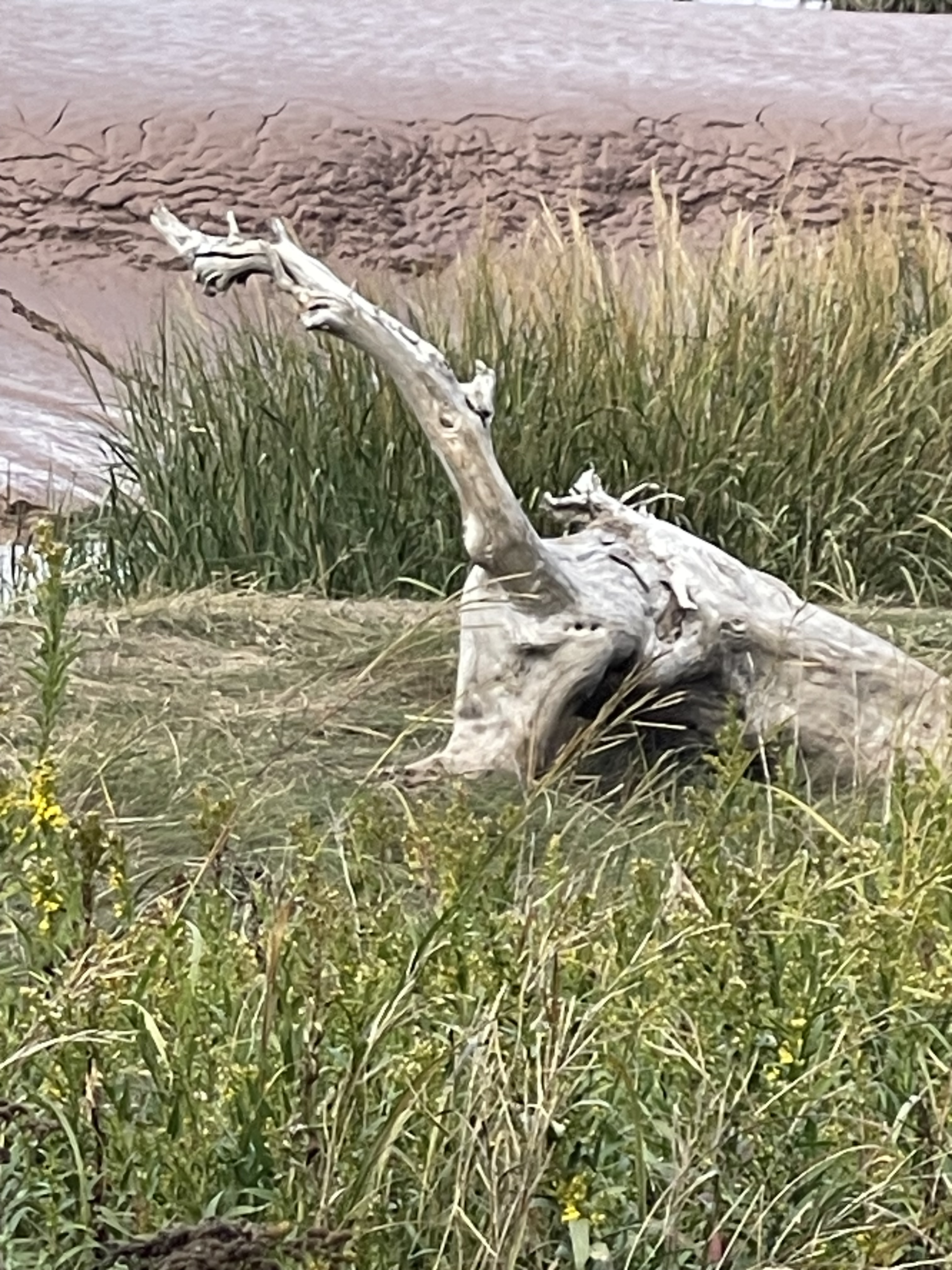
There were many plants that are quite different than those to which I am accustomed, including one that looked like an innocent Queen Anne’s Lace but was as toxic as Poison Ivy. It is given the romantic name of Cow Parsnip. There were interesting cuts in the mud that disappear during high tide and, swaths of green trees with sudden bursts of colour in them. And of course, there were also the persistent seagulls.

While walking along I thought of my friends Matthew and Sarah and was telling Heather about Matthew’s recent St. Ninian Walk. I told Heather that when I saw Matthew in the hospital, he and I had talked about Little Doc, Hugh MacPherson. We had each done research on Little Doc, he for his pilgrimage, and I for completely different reasons and we had learned different things about him. I told her how there is so much he is able to see when he is making his pilgrimages, because, for him, walks are pilgrimages. I told her that I try to think of walks in a similar way. For me, today’s walk did seem like a pilgrimage of recovery, and I rejoice.

As Heather and I walked there were quiet places, and there were thin places, and there was wonder. We were only out by the mudflats for only about ninety minutes–but it was enough for nature to have changed her appearance between our walk out and our walk back. It was a good day–and I am very grateful to my cousin.

0

Classism is an ‘ism’ that’s still very acceptable

If the name Nina Cohen rings a bell, I’m not surprised. She was the National President of Canadian Hadasah-WIZO in the 1960s. However, in the community of Glace Bay, Cape Breton she is remembered for many more important, local supportive activities than that. She was responsible for both the creation of the Men of the Deeps and the Cape Breton Miners Museum.

I think it’s important to know — the museum does not receive any government funding as part of the “Nova Scotia Museum: The Family of Provincial Museums.” I just learned this. I don’t know why it’s not included with the others, and I hope I can find out more information than the media release given by the office of the Nova Scotia Heritage Minister. While I search, the cynical but very realistic part of my brain thinks it’s because it’s a museum about working-class history. Its exhibits and tours do talk about various elements of the coal industry, such as the geology, but the display is from the miners’ perspective. It gives information that is difficult to find in other museums. From a miners’ perspective, the owners do not fare too well, and the governments (regardless of party at the time) fare even worse. As someone who is currently researching religion in labour activities, I am sad to say that religious organizations don’t fare too well either.

I hope that the United Mine Workers of America-Canada and the Canadian Labour Congress give it some funding but I am not sure if they are aware of the current situation. This museum tells one of the most important stories of worker history and labour struggles in Eastern Canada if not in Canada as a whole. It is a story that affected the entire nation and parts of the nation at different times. During both World Wars, the story went beyond national borders and had global implications.

Of course, as a society we are still classist, and we often think worker history is unimportant to explain any sense of achievement, so why should it be funded? We want to know about the decision-makers and the famous. (Yes, that’s the cynical, but realistic side of my brain again.) We include almost none of working-class history in our school curriculae, except a brief mention of the Winnipeg General Strike, and even that usually focuses only on the leaders. It is no wonder that we can easily turn away from the worldwide abuses of child workers, and unsafe working conditions when when we don’t seem to care about workers, in general.

This museum is important not only to the history of Cape Breton miners in particular but also to miners throughout North America and to a myriad of working-class people. Although the context is different in different places, the struggle for recognition of the work, the workers’ humanity, and the workers’ contribution to the economy and society is common. The last mine here was closed in 2001. The number of old miners is decreasing, and the story will soon be lost without the museum, for the sake of a “more balanced” perspective elsewhere. Who gets to assess the balance? The blindfolded lady justice comes to my mind.

Today, I decided I’d worship in St. Paul’s Presbyterian Church, Glace Bay. It keeps popping up in much of my research and I thought it would be good to visit. The greeting and worship created a warm, caring and thought-provoking experience. The first thing to which I was directed when I entered the building was a petition to the Nova Scotia government to give an appropriate level of funding to the Miners Museum. As a non-resident, my signature would be meaningless, but I said I believed in the museum and I had made a small donation while I was there, and would help in any way I could. I am also happy to say that both their MLA, John White, and their current Regional Councillor, Ken Tracey (there is currently a municipal election underway) support the request for government funding. I would hope the federal government would also give funding, because this is not “just a regional story.” Historically, our federal government made many decisions that affected what happened in this area.

So why did I start off by mentioning Nina Cohen? She was never a miner. She never went underground, at least not before the museum was built. I mentioned her because Nina Cohen knew it was the miners who built Glace Bay, Reserve Mines, Dominion, and much of Cape Breton. She knew it was the workers who toiled, sweat, bled, waded in water up to their calves, crawled on their bellies in crevices barely three feet high to pick, shovel and blast coal, and died from black lung, methane, fireballs, explosions and mine collapses; who with their families, who worked just as hard to live on the wages that were paid, and with the coal that was always in the air who created the community. This daughter of a peddler turned shop-keeper who obtained her Ph.D. knew the importance of the Miner to the community–and in Canada’s Centennial year, led the drive to commemorate this fact by spearheading the museum build so the story wouldn’t be lost or forgotten. Until now, this has been one of the very few museums that has told the story of the workers and not the process or the product. The uniqueness of this museum is what makes its story important to the history of Canada.

While there are still the “old miners” who volunteer their time by sharing their stories and leading tours at the museum, it cannot continue forever. The various levels of government should remember that workers’ history, working-class history is valuable history, not just to the people of Glace Bay, Cape Breton but also to the woman writing this, who lives halfway across the country in Ontario–and to a number of other people between here and there.

0

I am bereft

I am bereft.
 
I have had the same wonderful family physician for 42 years. He has seen me through university graduation (the first time), he saw me through my first employment woes, my uncertainties and insecurities. He saw me through university graduation (the second time), he saw me through a marriage, difficulty getting pregnant, pregnancy difficulties and childbirth. He saw me through my sports competitions and injuries, my various maladies and frustrations. He saw me through stages of caregiving for three ageing parents who had varying struggles. He saw me through marriage strife, through employment injustices, through parental deaths and grieving, through a hospital misdiagnosis and was not satisfied to say I had fallen through the cracks. He saw me through university graduation (the third time). He discovered why I was falling all the time and sent me to the right surgeon, he saw me through relocating, through widowhood, through anxieties and concerns that he assured me were very justified. He has seen me through every important event of my life–both the good and the bad and today he retires.
 
Although I knew it was coming it has sneaked up on me and I am bereft. If I succeed in what I am doing I cannot believe he will not be there to see me through university graduation (the fourth time). I owe him so much. Enjoy your retirement Doc.
 
On Tuesday I meet my new family doctor. It’s the beginning of a new era. I wonder if he will put up with me for 42 years.
Thank you doc.png
0

It’s time to say something…

<> on June 12, 2018 in McAllen, Texas.

JOHN MOORE VIA GETTY IMAGES

Recently, Colleen Kraft, who heads the American Academy of Pediatrics, visited a shelter run by the U.S. Office of Refugee Resettlement. She reported that while there were beds, toys, crayons, a playground and diaper changes, the people working at the shelter had been instructed not to pick up or touch the children to comfort them. Imagine not being able to pick up a child who is not yet out of diapers.Laura Bush in the Washington Post, June 17, 2018

I try to make my public profile as positive as possible. There’s enough negativity in the world. That doesn’t mean that I shy away from sharing news articles or items that concern me, that I think are interesting or worth reading. It also doesn’t mean that I refrain from engaging in discussion, dialogue or disagreement, as long as it does not become personal. It doesn’t mean I look at the world through rose coloured glasses or shy away from the world’s unpleasantness.

It does mean that I value a variety of opinions and perspectives. It does mean that I believe in people’s freedom to share those opinions and perspectives in a respectful manner. It does mean I try to understand people who hold opinions and perspectives different from my own and try to make myself understood to them. It does mean that I search for ways of living together with differences.

However, the ongoing separation of children from their parents that is now occurring in the United States of America as the result of a directive of President Donald J. Trump demands that I say something. It does not matter that I am unimportant. It does not matter that I have no influence. It does not matter that people don’t care what I have to say about anything. It does not matter that this may be read by only one other person. It is time to speak out…

President Trump’s actions are wrong!

In fact, as a Christian who tries to live in a manner that I believe shows love, respect and gratitude to God it is my humble opinion that President Trump’s actions are sin.

I say this as someone who spent 12 years (four as President) on the Board of Directors of the Massey Centre for Women. Massey Centre began in 1901 as a maternity home and is currently an “infant and early childhood mental health organization which supports pregnant and parenting adolescents, aged 13-25 and their babies.” I say this as someone who spent twelve years on the York Region Children’s Aid Society Board of Directors, including a short times as President. Both agencies knew that the separation of children from their parents would be damaging and in some cases that damage would be permanent. That is the reason that so much work and so many resources were used to keep families together. Only if there was evidence that greater harm could be done to a child by remaining in the family was there a separation.  I also say this as a Canadian of settler descent who is aware that settlers before me separated indigenous children from their parents and the consequences were destructive. That damage has continued for generations.

I can no longer refrain from saying anything as I recently spent a week in the USA. I went to one of my favourite American Museums, The Tenement Museum and enjoyed learning even more about the benefit of immigrants to the USA. I can no longer refrain from saying anything because I stood on Dr. Martin Luther King Jr. Boulevard and I remembered his letter written in the cell of a Birmingham jail to clergy asking, if not now then when. I stood in front of the African Burial Ground National Monument and was reminded of the children torn from parents and re-sold as slaves. I can no longer refrain from saying anything as I read of four former first ladies, known for their restraint in commenting on the decisions and actions of a sitting president, criticizing the separation of children from their parents.

I can no longer refrain from saying anything as I have recently read a biography of Sophie Scholl who was executed for telling people what the Nazis were doing was wrong. I am reminded of the famous words of Martin Niemöller “Then they came for me—and there was no one left to speak for me.” Initially, Niemöller thought that Hitler could solve the nation’s problems and so he supported the Nazis. By the time Niemöller began to question his support of Hitler’s ideology it was too late, but even so, he was willing to speak out and went to prison.

I can no longer refrain from saying anything because I believe the editorial cartoon of Mike Luckovich says so much.

mikefix

Mike Luckovich  – The Atlanta Journal Constitution June 14, 2018

I can no longer refrain from saying anything because I have seen the supporters of this President misuse and abuse texts I believe are sacred. Like many others I believe Jeff Sessions misused Romans 13:1. I am tempted to counter him by turning to scripture passages that demonstrate a despot who in his desire to retain power and to get his own way is willing to sacrifice children; passages such as Exodus 1:22 or Matthew 2:16, but I shall refrain.

It is time to say something… For me it is time to say that I believe that President Trump’s directive that results in children being separated from their families is sin.

0

I haven’t got the words…

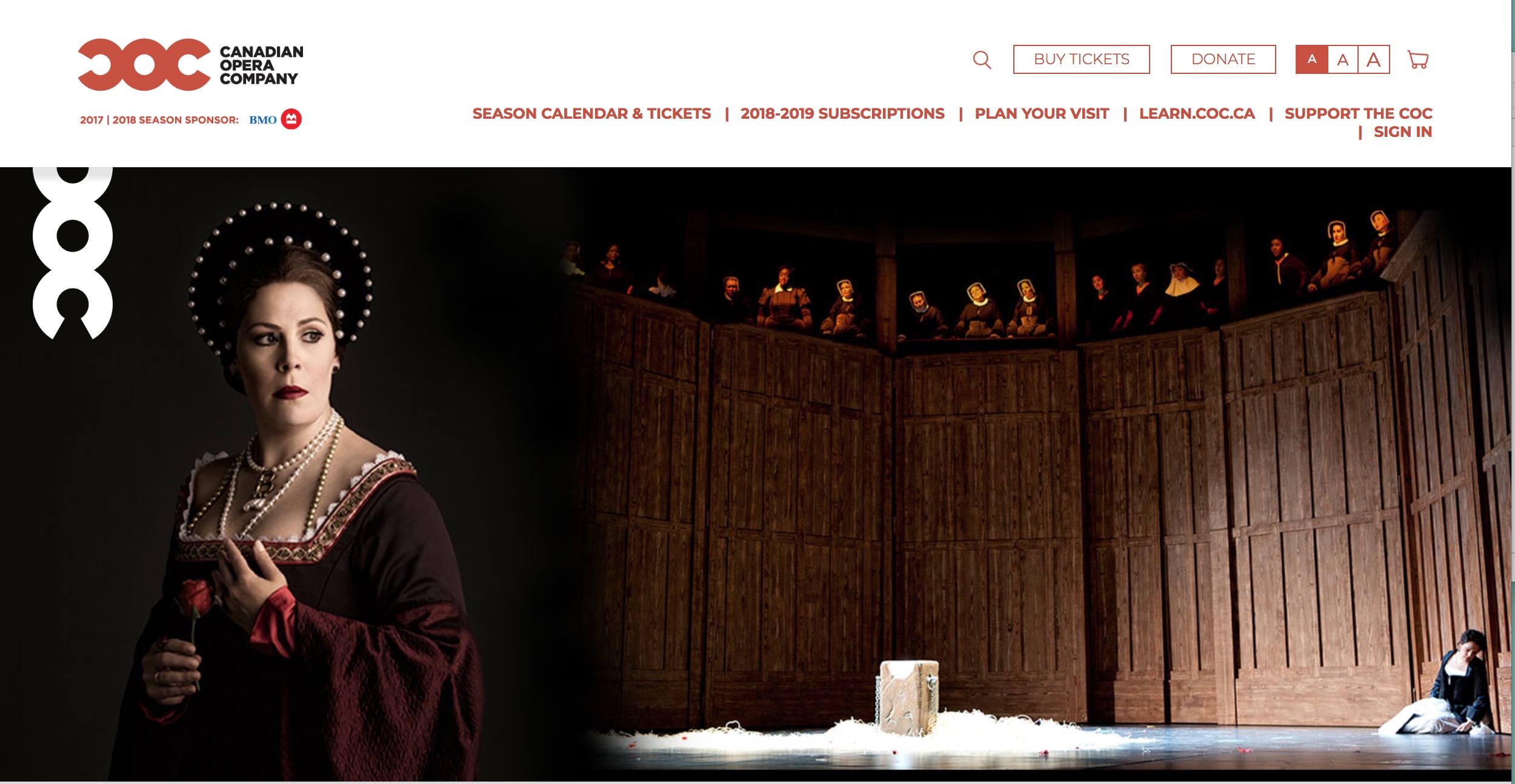
Anna Bolena

Left: Sondra Radvanovsky in Anna Bolena (Washington Opera, 2012), promotional photo: Cade Martin; A scene from Anna Bolena (WNO, 2012), photo: Scott Suchman.


I was given the gift of a ticket to see tonight’s production of Donizetti’s Anna Bolena performed by The Canadian Opera Company. I cannot begin to describe it but I’m going to try.

I have been attending operas since I was five years old. My parents took me to an English production of The Barber of Seville in the hope that I would fall in love with the art form as much as they had. That night, so long ago, I was filled with wonder and awe and amazement, and felt goose bumps as I saw and heard something more spectacular than I had ever seen or heard before. Since then, I have attended a variety of types and styles and genres performed by a variety of companies and enjoyed the majority of what I have seen. However, tonight when I experienced the COC production of Anna Bolena, I felt all those same feelings that I felt when I saw my first opera. Spectacular seems too mundane a word for this performance.

Gaetano Donizetti’s Anna Bolena is both interesting and intriguing simply in its existence. Like most historical operas it shouldn’t be taken as a history lesson. Many of the “facts” are the result of artistic license. But the libretto gives an impression. The impression is from a Roman Catholic, Italian perspective, and is about the tumultuous English Tudor Court of the king accused of breaking the church–Enrico VIII. For those of us who have been raised with an Anglocentric history education about Henry VIII, this in itself, is fascinating.

Although my parents had a recording of this opera that I frequently heard as a child, and I now have my own recording, I had never seen a performance before tonight. The opera is infrequently performed, I am told because it is so demanding. The three hour story, in two acts, is dependent on the two lead soprano’s and this production’s Sondra Radvanovsky (Anna Bolena) and Keri Alkema (Giovanna Seymour) are a tour de force in their respective roles. The programme notes indicate that the two women are very close friends. It is evident that they use this friendship to reach added emotional depths in the duet of the second act when Giovanna reveals that she is “the other woman”. As each woman’s individual vocal excellence joins with the other, they create a musical interplay that combined with their physical interaction is spellbinding. Alkema truly appears as a woman bereft upon the sudden realisation she is sending her best friend to die; Radvanovsky portrays the trauma of registered betrayal with genuine consternation. Even though at the beginning of the duet it appears that Giovanna is waffling in her desire for the throne, upon receiving Anna’s forgiveness, her physical deportment shows her beginning to regroup and reconsidering her grasp at power.

Other than the duet there are two specific scenes where Radvanovsky’s dramatic abilities, as well as her incredible voice, are particularly entrancing. In Act I there is a short section when she is in front of Enrico and she realises that Enrico is not simply less interested in her, but rather, he has fallen for someone else. She portrays an incredible fragility and uncertainty as she suddenly becomes aware that her whole world is going to come crashing down. Her voice sounds weak and yet it retains it’s clarity and precision. The weakness is the character’s and not the singer’s. The second scene is “the mad scene” near the end of the opera. Donizetti seems to enjoy presenting mad scenes and Radvanovsky’s performance makes Anna’s solo every bit as unnerving as Lucia’s.

Alkema, as Giovanna, too shows off an exquisite vocal capability that reflects a variety of emotions when confronting Enrico. Her pleading that Anna be spared is quite different from her tense but assured interactions with Anna. She is able to vary between insecurity and imperiousness with ease.

Even though these two women drive this opera it would not be the success it is without others in the cast. Christian Van Horn is as close to perfect, in his portrayal of Enrico, as one could hope. I had to think about his performance carefully because I naturally fall in love with the bass. (I’m one of those who’s always cheering for Mephistopheles in Faust and in Jesus Christ Superstar it was Caiaphas and Judas who stole my heart. I don’t think that was the Gospel writer’s intent.) Despite my bias, upon reflection I realise it is the complete package that Van Horn offers that makes his Enrico so amazing. He is the perfect, handsome, “chick magnet” disdainful, arrogant, womanizing, self-centred, powerful, sexist, stylish, athletic creep! His voice oozes megalomania with a quality that makes the hearer quiver. He is an appropriately Machiavellian prince. Van Horn’s Enrico is one you love to hate

Bruce Sledge as Lord Riccardo Percy does an excellent portrayal of the typical weak hero. If he were to take it any further Percy would become a buffoon. Sledge draws the line at just the right point. His voice has a pleading quality when he approaches Anna that clearly indicates his passionate desire while maintaining its clarity and quality. Throughout his performance he professes his love for Anna and at the same time refuses to do the one thing that might keep her safe, he refuses to leave her. Even for those who know the ending of the opera Sledge’s performance offers surprise. He has performed the feeble hero so well that when Riccardo actually does the heroic thing in the end it is a shock. I was most concerned about the portrayal of this role–that the tenor would try to portray him as a true hero rather than as the flawed character he really is. Bruce Sledge delighted me in his portrayal.

Allyson McHardy as Smeton must also be mentioned. Her portrayal of the lovesick young man is extremely sensitive. Normally, when I’ve heard this opera, I’ve thought of Smeton as a necessary incidental. He is important to the plot’s development but it is hard to get a sense of who he is. McHardy in her vocal and physical portrayal gives the character a depth that was enchanting. Here is the young man full of hope and love (really infatuation) while at the same time despondent because he knows his dreams will never be realised. For me, she brought Smeton to life in way that made his death even more tragic.

The cast is well matched because in each of the ensemble sections all voices can be heard both distinctly and as an integrated whole. The performance of the cast is superb. So is the performance of the orchestra under Corrado Rovaris. Too often I have thought of the COC orchestra as too loud for the stage performers, sometimes overpowering them, but this performance strikes the perfect balance.

Was there anything I didn’t like? Yes. I intensely disliked the costumes of Ingeborg Bernerth and the staging was not impressive. Many of my opera loving friends would say, “Who cares when you have voices like those?” However, if I didn’t want to see “a show” I would be satisfied with a concert performance.

The director, Stephen Lawless, describes this opera in his notes:

We remain within the framework of our Globe Theatre setting, now suitably altered to reflect an earlier and darker milieu than the sophistication of Elizabeth I’s reign, a world where entertainment was more about the bear-pit then [sic] the subtleties of Shakespeare’s (as yet unwritten) verse, a world as much influenced by the medieval as by the Renaissance.

He is placing it within the context of the other two Donizetti Tudor operas performed by the COC. Unfortunately, I don’t think what he describes works, especially not in the first act where it is more drab than dark.

Using the Globe theatre as the framework has separated the ensemble from the main characters in a manner that places them in the position of the Greek chorus. They both observe and comment on what is happening and they do not engage as the servants, courtiers, retainers and advisors who are integral to the court and active within it. Even some of the essential minor characters, such as Hervey, went back and forth between the action and the Greek chorus making him more ephemeral than devious. The only time that there seemed to be a bustling court was at the end of Act I when Enrico makes his accusations and the supporters of Anna respond. This staging seems very disjointed. As well, at times the movement of the set was “clunky” and distracting as opposed to being enhancing of the performance

In the opening of Act I Anna is waiting for the return of Enrico. She is hoping to save their marriage. She appears in her first costume and it looks drab. Fortunately Radvanovsky’s carriage gives the role a sense of sophistication that was absent in the costume but that is not sufficient. Even within the confines of Romani’s libretto it is clear that the only hope of Anna’s survival as queen (her death is not yet being considered by the text) is to have a male child for Enrico. These events occur in an era before IVF. There is only one way the goal could be accomplished. Looking drab is not the way for Anna to achieve success. The only really glamorous costume was in a very cheesy moment when Enrico is dressed in the outfit of the Hans Holbein painting and strikes the pose. (Yes, I know it was during Seymour’s time that his painting was done but it’s just kitchy.) I believe it is no longer artistry when sets and costumes are removed from the plot and actually work counter to the plot. The performances of the cast however were so superb that the appearance of the stage could usually be ignored.

If you live within eight hours of Toronto and the COC, and if you can get tickets, take the time to see this performance. Even if it is the only show/concert/ recital you can afford this year. I imagine it will be another 60+ years before I will see another operatic performance that moves me so.

I started by saying “I haven’t got the words…” and yet I have used so many to describe the experience I had with Anna Bolena. The difficulty in finding one word that does justice to describe the evening is why there are so many. Anna… Brava!